Don’t know what a 52 Fuji is? Check out this page.
It was my first ever summer holiday since university, as my new job 12 years ago saw me working at a high school, meaning I got one month of fully paid summer holiday. I did what any normal person would do – I take another job. I opt to spend two weeks in Gunma teaching kids English. It’ll be fun, I tell myself, and in most ways that matter it is – the kids are great, plus it gets me close to two Fujis that I can visit on my day off.
Like most everywhere else I went to in Gunma, Fujiyamashita is a place where nothing happens. It’s another of those Fujis. It looks like nothing has ever happened here, will ever happen here, and let’s be honest – could ever happen here. But that’s not strictly true. It’s a pretty colourful place for reasons that are very much not in evidence at first glance.
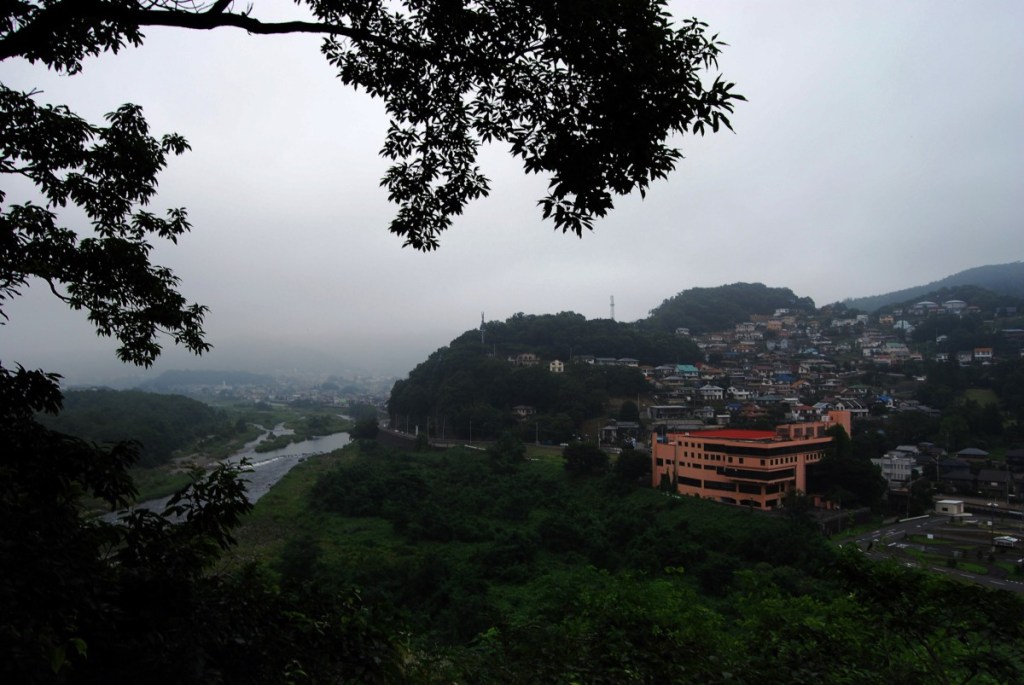
Fujiyamashita is a part of Kiryu City, a place that has a bit of history, and a bit of mythology, two things that shouldn’t really go hand in hand as much as they do. Once upon a time, it was the main area for sericulture (raising silkworms to you or I) and even made the standards for Tokugawa Ieyasu’s army. (You remember him, he got to be the big bossman of Japan.) The story of how the silkworms came to be in little old Kiryu is one little colourful tidbit that makes Fujiyamashita a little less boring than it seems.
Way back when, there was a local lad who had exceeded the expectations everyone held for him- he’d learned to read & write, quite the feat for a farmer’s son at the time. The town had to send young men to work in the gardens at the Imperial Court every year, and this kid was considered good enough to go. Now, court was very much like high school in American movies: all the hot girls were bitches. Poem writing bitches, which is not really like high school in American movies outside of Heathers or Mean Girls, but eh, close enough. One of these pleasant young ladies wrote a poem about our local lad, and he found it by accident. He wrote a charmingly scathing reply and everyone was dead impressed.
In the end, there’s a fierce hip hop battle, his rhymes are tight, hers ain’t and he gets to marry her. Turns out her hobby is raising silkworms and when he brings her back to his hometown in the arse end of nowhere, she’s happy enough to leave the city lights behind because he lets her bring her worms.
The rest, as they say, is history.
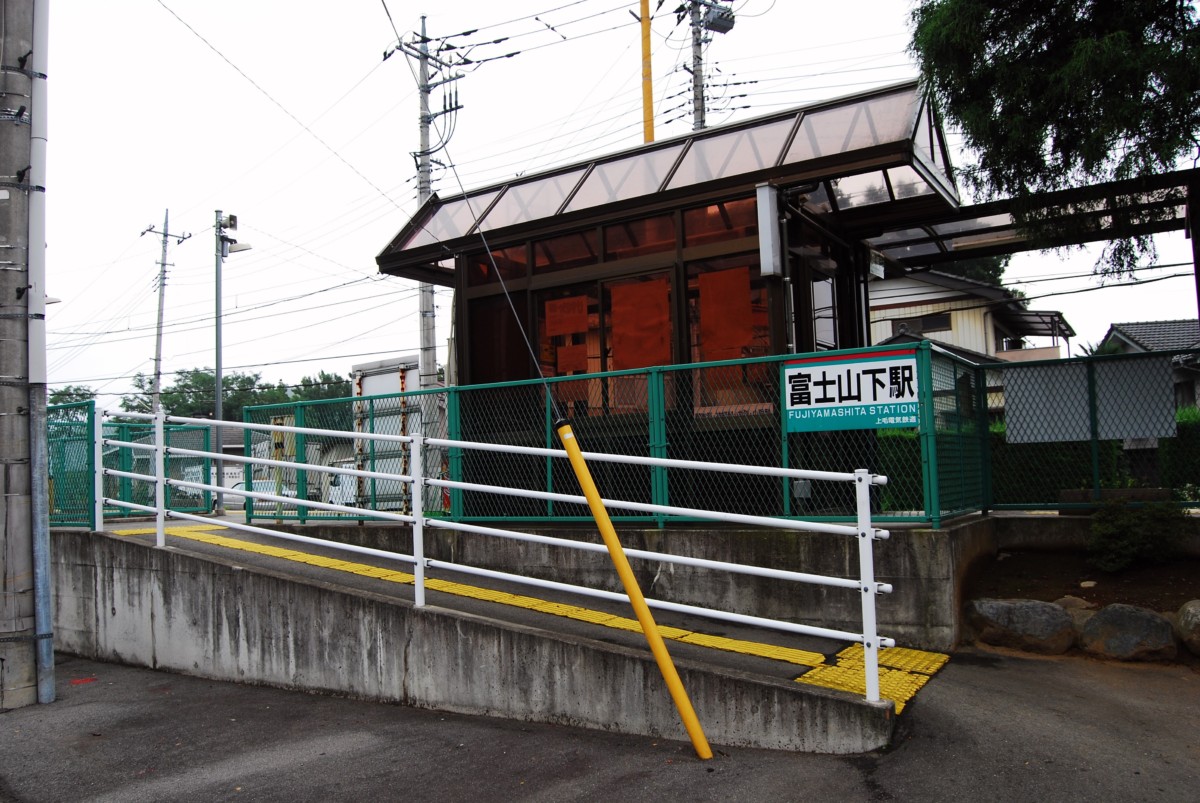
Now the other little bits of colour that make Fujiyamashita more interesting both stem from its name, which means ‘under Fuji mountain’. Cartographic experts amongst you may already have deduced that Gunma is a pretty long way from the mountain even if this locale bears the same characters as the mountain itself.
At the time, I hadn’t a clue what any of this was all about.
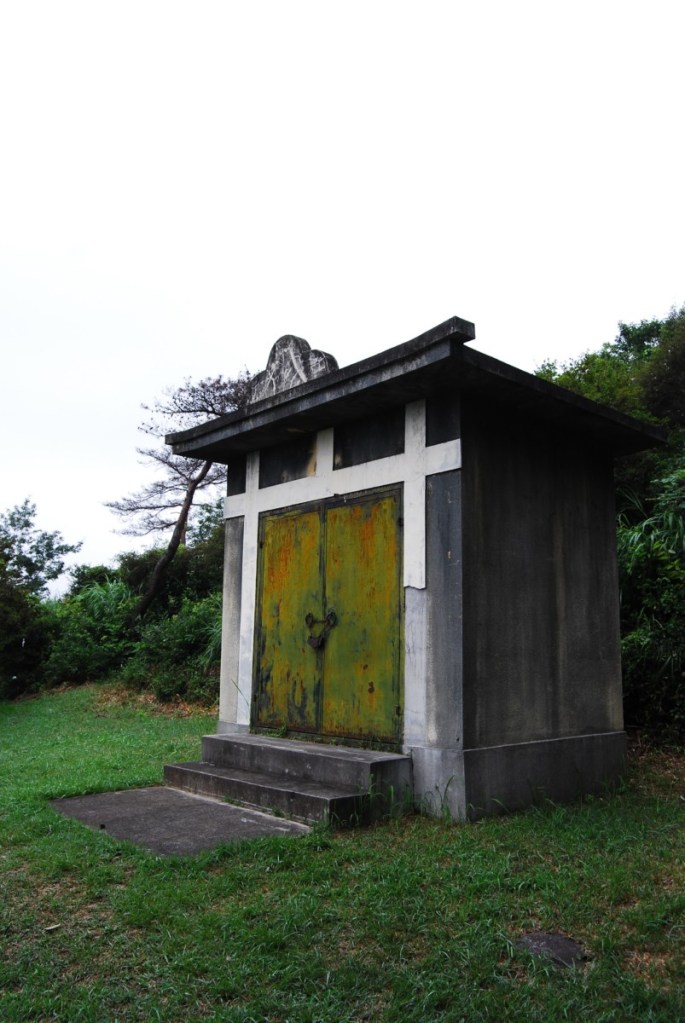
I tried looking up the hill beside the train station, and found nothing but mushrooms, cobwebs, and a couple of dilapidated shrines – one of which had a Mount Fuji shape above the door. I thought there might be a connection but it wasn’t really clear way back when.
Turns out that a local mountain is called Mount Fuji, has a shrine on it dedicated to Mount Fuji, and, once upon a time, people used to climb it in lieu of visiting the actual thing.
It also turns out that a lot of tourists end up at this station by accident, in search of Mount Fuji itself. (I’m curious to know if this still happens as often.)

FUJIS LEFT AT THE END OF JULY 27th, 2008 : 27/59
 CityHillsAndSea
Leave a comment