There are more than a few steam locomotives sitting in parks across Japan, enjoying their retirement.
I wanted to acknowledge the ones I happen across for all their hard work, so I started the Static Life Steam Locomotives Project, SLSL for short.
A map of the Static Life Steam Locomotives & more about the project is here.
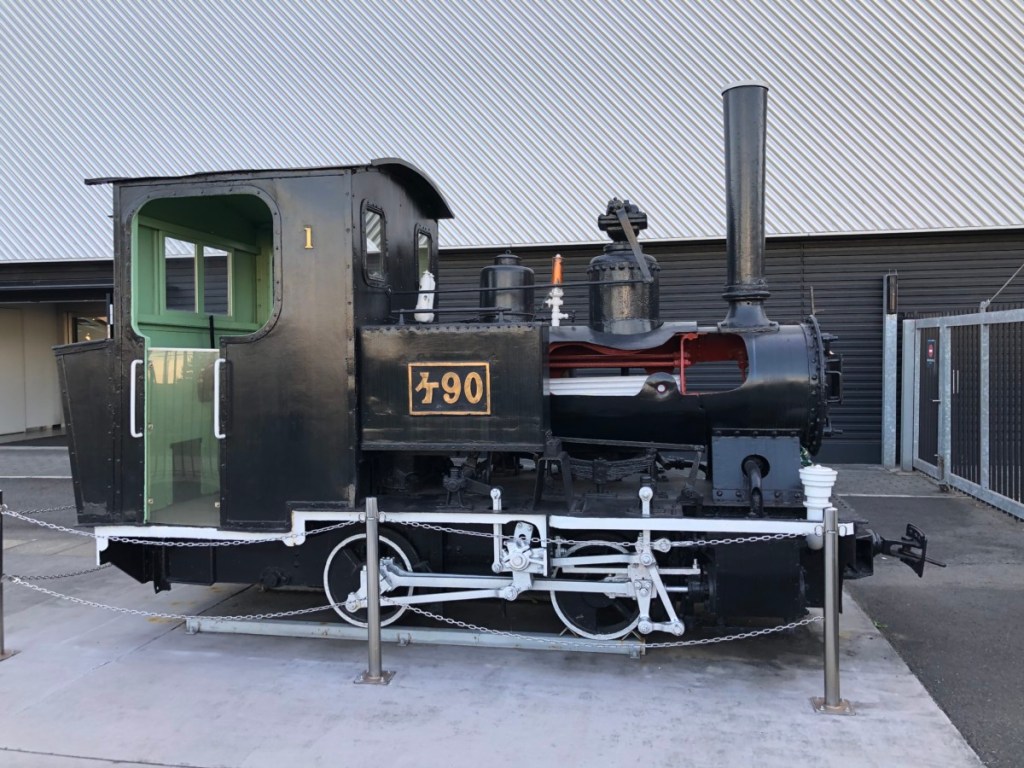
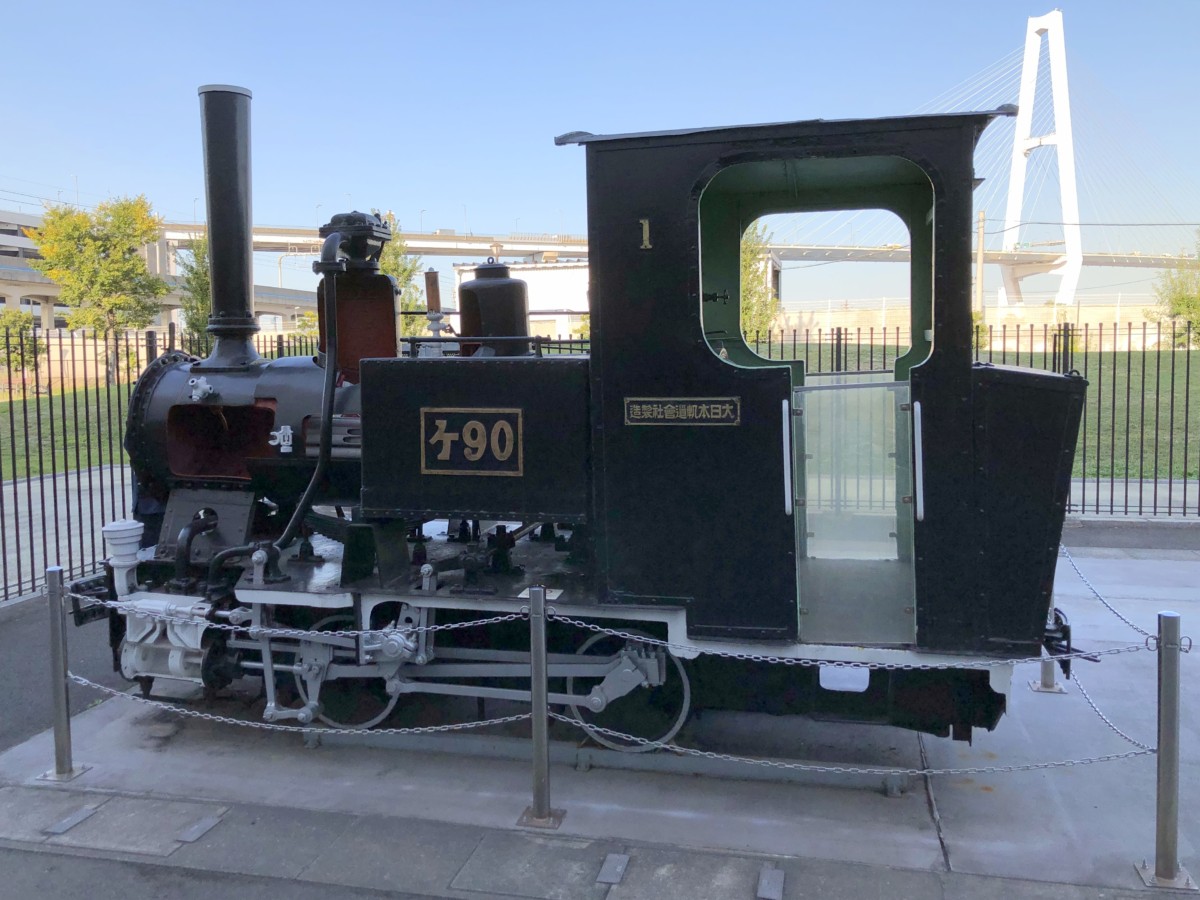
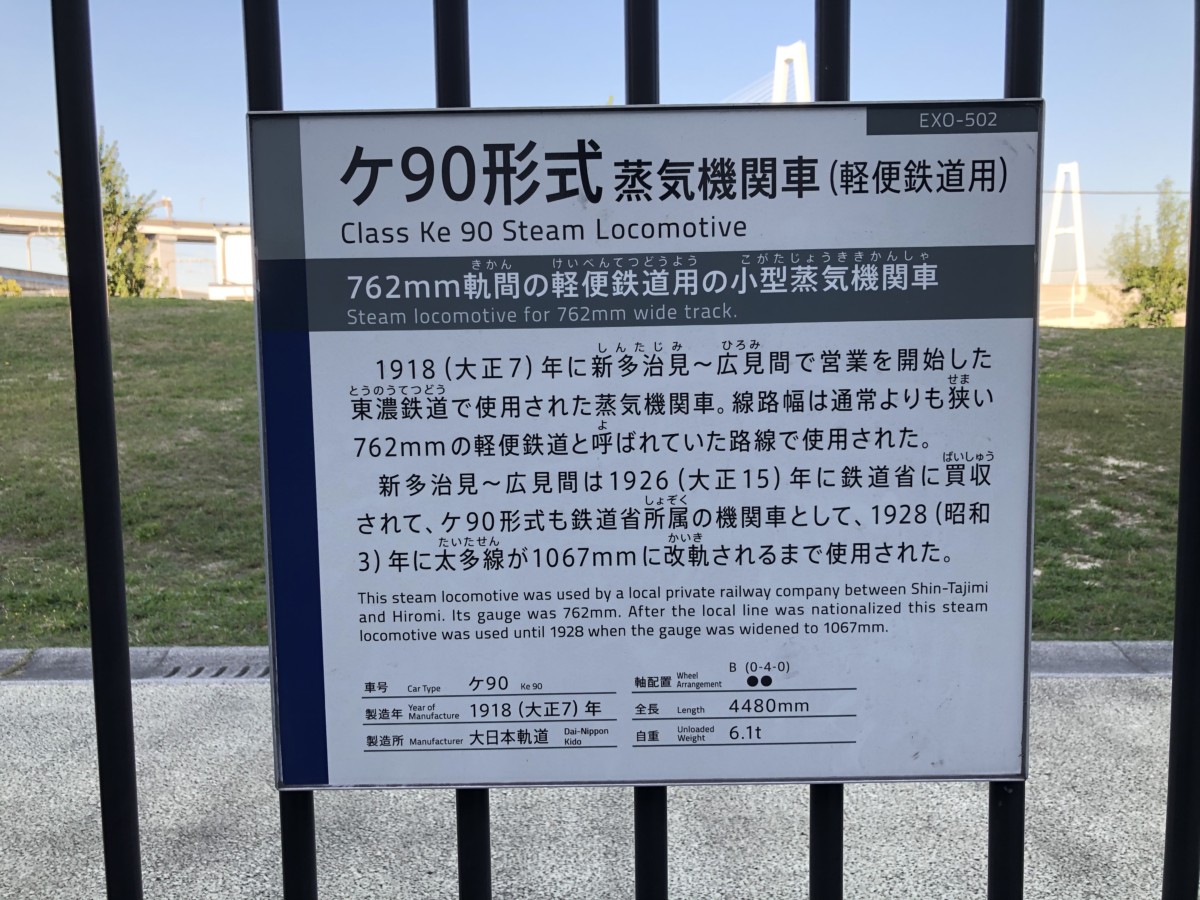
This little guy has quite a colourful history. Born in 1918, he started off life as one half of a pair of trains. Ke 90 started working for the Gifu-based Tono Railway company, later to become the Tomi Railway company which would, in turn, merge with Meitetsu in the 1940’s. More on that, at Japanese wikipedia here – you should probably go check out that wikipedia entry even if you can’t read any Japanese, the Tomi Railway company logo was fire.
Before that merger though, part of the Tomi Railway line was nationalized so Ke90 became a JNR train at the end of 1926. In 1935, he was vivisected – gasp – and used for training. Never fear though, for the story has a happy ending. In 1963 he was restored, and just hung out at the Inazawa depot in Aichi before moving in 2011 to the SCMAGLEV & Railway Park.
His twin brother ended up in Hamamatsu as it happens, in a memorial park, named Horidome Poppo Road… I think. My transliteration skills aside, you can see that train on google maps here.
If you’re interested, here are the specifications of the engine, lifted again from Japanese wikipedia:
Overall length: 4,581 mm
Ke 90 Entry @ wikipedia
Overall height: 2,743 mm
Maximum width: 1,676mm
Gauge : 762 mm
Axle arrangement : 0-4-0 (B)
Driving wheel diameter: 559mm
Valve device : Walschaert type
Cylinder (diameter x stroke): 152 mm x 254 mm
Boiler pressure: 11.2 kg / cm 2
Grate area: 0.25m 2
Total heat transfer area: 7.99m 2
Locomotive operation maintenance weight: 6.1t
Water tank capacity: 0.79m 3
Fuel load: 0.18t
Locomotive performance
Cylinder tensile force: 1,000 kg
Brake method: Hand brake
You can visit Ke-90 here.
 CityHillsAndSea
Leave a comment