There are more than a few steam locomotives sitting in parks across Japan, enjoying their retirement.
I wanted to acknowledge the ones I happen across for all their hard work, so I started the Static Life Steam Locomotives Project, SLSL for short.
A map of the Static Life Steam Locomotives & more about the project is here.
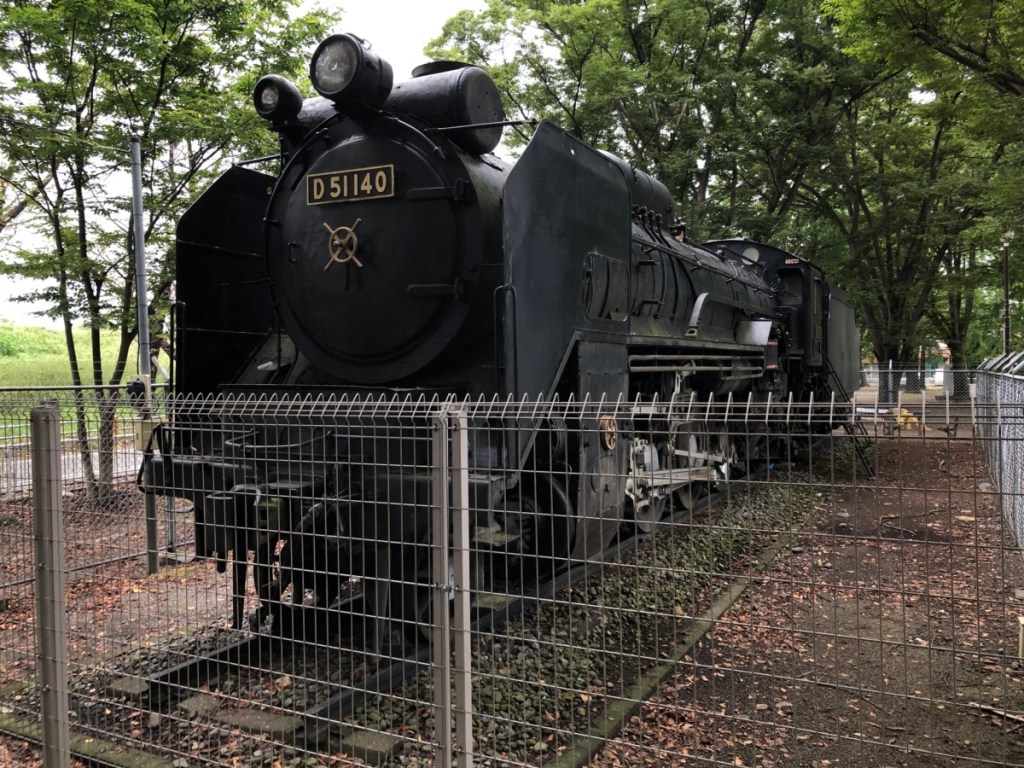
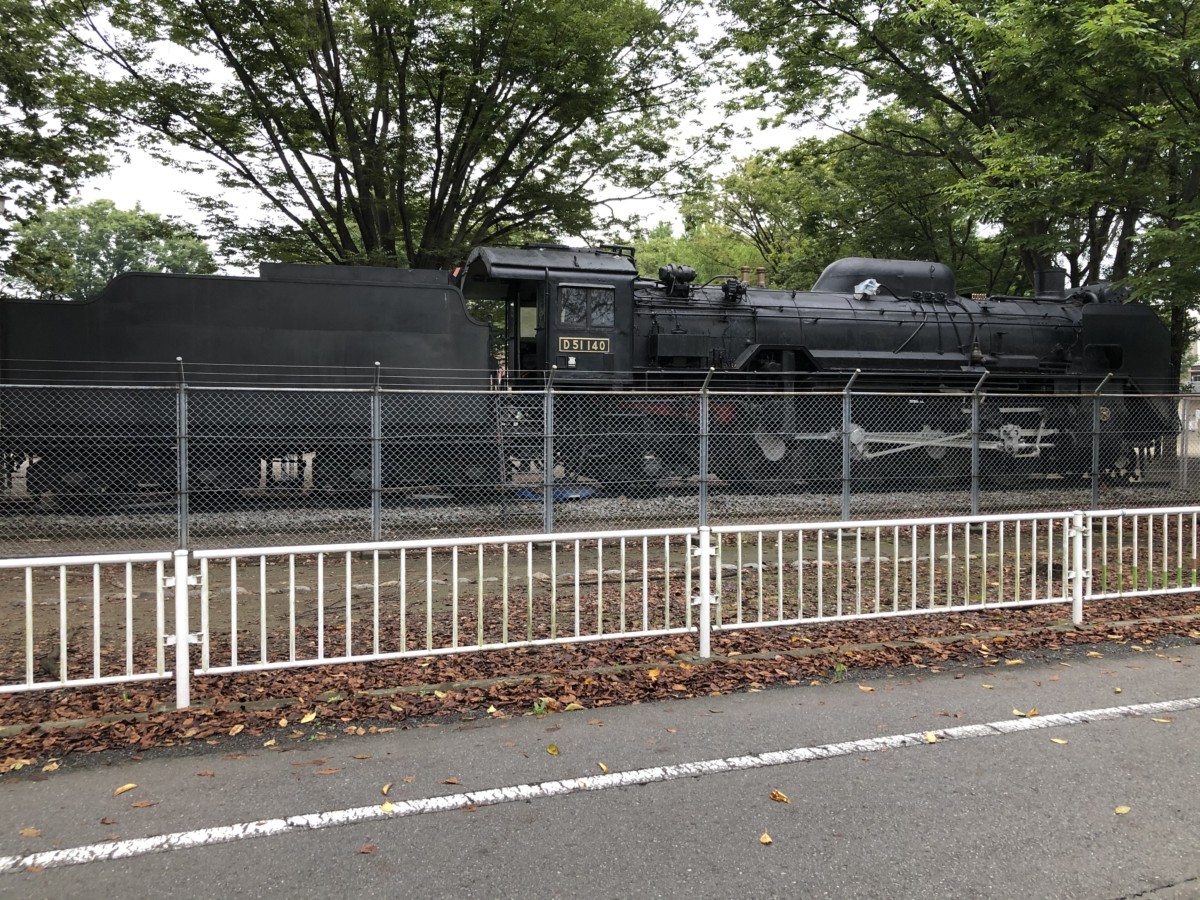
Bit of me addressing an oversight here: this train, D51-140, is the train that started it all, in September 2020.
Was heading out for a morning run in Kumagaya and happened across this specimen sitting in a park. I chuckled a bit about how there are all these steam trains in parks in Japan, took a couple of photos & forgot all about it.
Except I didn’t. The extended period of exercise allowed that little chuckle to settle down in my grey matter & incubate into another one of my stupid ideas.
I’d end up making a map of steam trains in parks across Japan and then I started making little trips to vist them whenever I was in the neighbourhood, because it wasn’t like I already had enough to do, trying to move 10,000km across the world during a pandemic.
And here we are.
Anyway, this train here is a D51, which isn’t terribly exciting: they tend to be the most common park bound trains leading the Steam Locomotive Static Life.
Nevertheless, it had a pretty colourful life and I feel like it’s definitely earned a wee rest.
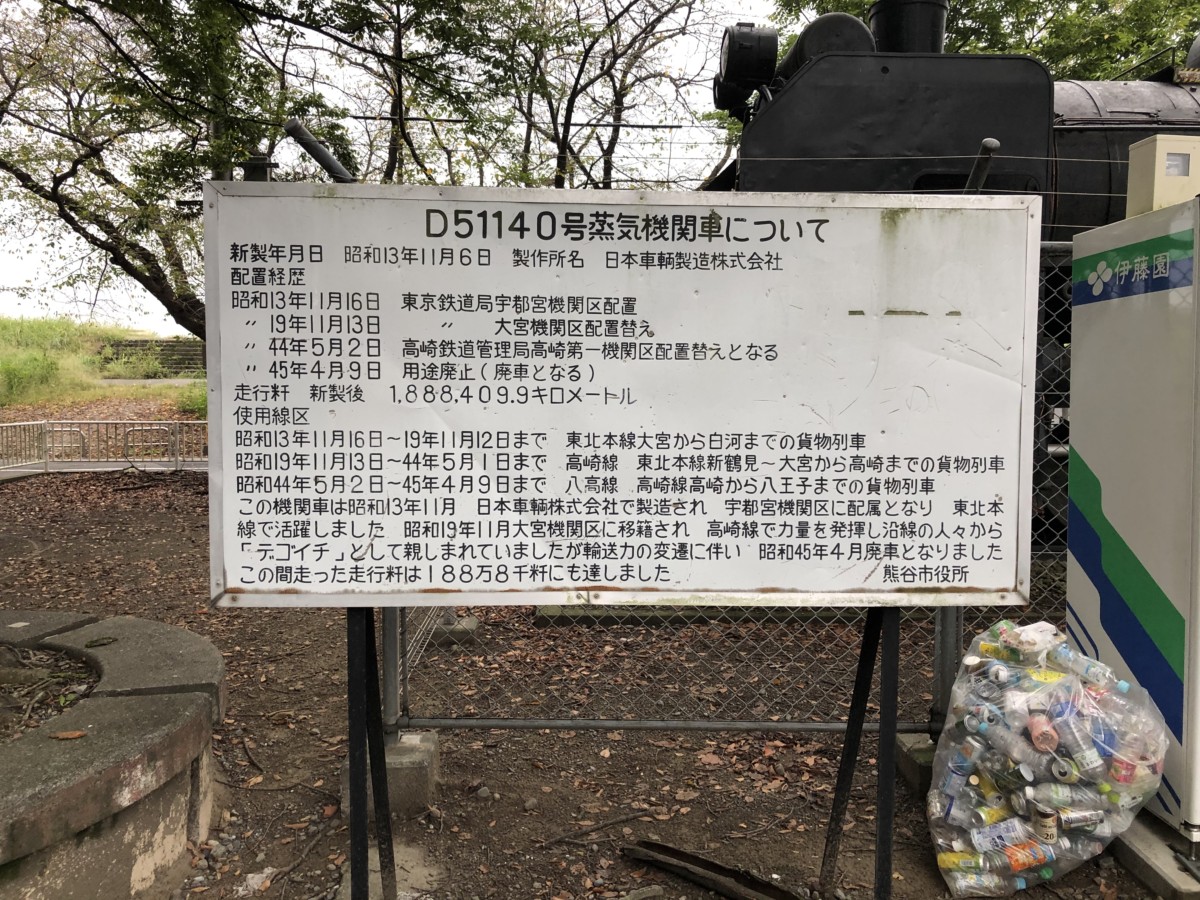
The information board tells us the following about D51-140:
Manufactured on November 6th, Showa 13 (1938) at the Nippon Sharyo Co., Ltd. factory.
Entered service November 16th, Showa 13 (1938) based out of Utsunomiya.
Worked as a freight train from Omiya to Shirakawa on the Tohoku Main Line until the 12th of November, Showa 19 (1944) and then was rebased to Omiya, November 13th, Showa 19 (1944).
From here, it worked as a freight train on the Takasaki line and the Tohoku main line, running between Shin-Tsurumi, Omiya and Takasaki stations.
On May 2nd, Showa 44 (1969) relocated to Takasaki, where it ran as a freight train between Hachioji and Takasaki (via those stations’ eponymous lines.)
Retired April 9th, Showa 45 (1970)
Travelled 1,888, 409.9 km throughout its life.
Oh and if statistics are your jam then here’s a breakdown of the details about this train, taken from the 国鉄D51形蒸気機関車 entry at wikipedia.
TYPE D51 (2-8-2 locomotive)
Built by the Japanese Government Railways (JGR), the Japanese National Railways (JNR), and Kawasaki Heavy Industries Rolling Stock Company, Kisha Seizo, Hitachi, Nippon Sharyo, Mitsubishi, and Mitsubishi Heavy Industries from 1936 to 1945 and 1950 to 1951.
Axis arrangement : 1D1
Gauge : 1,067mm
full length : 19,730mm
Overall height : 3,980mm
Locomotive weight : 78.37t (operation maintenance)
Tender weight : 47.40t (operation maintenance)
Gross weight : 125.77t
Driving wheel diameter :1,400mm
Axis load : 14.30t
Number of cylinders : Single 2-cylinder
Cylinder (diameter x stroke) : 550mm x 660mm
Valve device : Walschaert style
Boiler pressure : 14.0 kg f / cm² (1.373 MPa; 199.1 psi) (when first introduced)
15.0 kg f / cm² (1.471 MPa; 213.4 psi) (all cars afterthe war)
Boiler water capacity : 6.0m³
Large smoketube (diameter x length x number) : 140mm x 5,500mm x 35
Small smoketube (diameter x length x number) : 57mm x 5,500mm x 94
Grate area : 3.27m²
Total heattransfer area : 221.5m²
Overheat heattransfer area : 41.4m²
Total evaporation heattransfer area : 168.8m²
Smoketube evaporation heattransfer area : 147.4m²
Firebox evaporation heattransfer area : 17.5m²
Fuel load : 8.0t (Unit 1-954) / 10.0t ( Unit 1001-1161 )
Watertank capacity : 20.0m³
Braking device : Automatic air brake
Security device : ATS-P / Ps (498), ATS-SW / ATS-P (200)
Maximum driving speed : 85km/h
Maximum output : 1,400 PS
Rated output : 1,280 PS
You can visit D51-140 here.
 CityHillsAndSea
Leave a comment