The Enoden links Fujisawa & Kamakura via a coastal route that gives both those cities access to the little island of Enoshima – hence the name. It’s a charming, old-fashioned trainline, with some really interesting sights to be seen along the way.
Click this link for more info.
Local Sights
Koshigoe’s pretty small and, apart from some small shops and restaurants, doesn’t really have a whole lot going on,
There is, however, a couple of sights of note:
Manpuku-ji, the temple where a very famous letter was written from one brother to another.
Koryugu shrine, which is well woven into Kamakura’s past, and not just because it’s nearly a thousand years old.
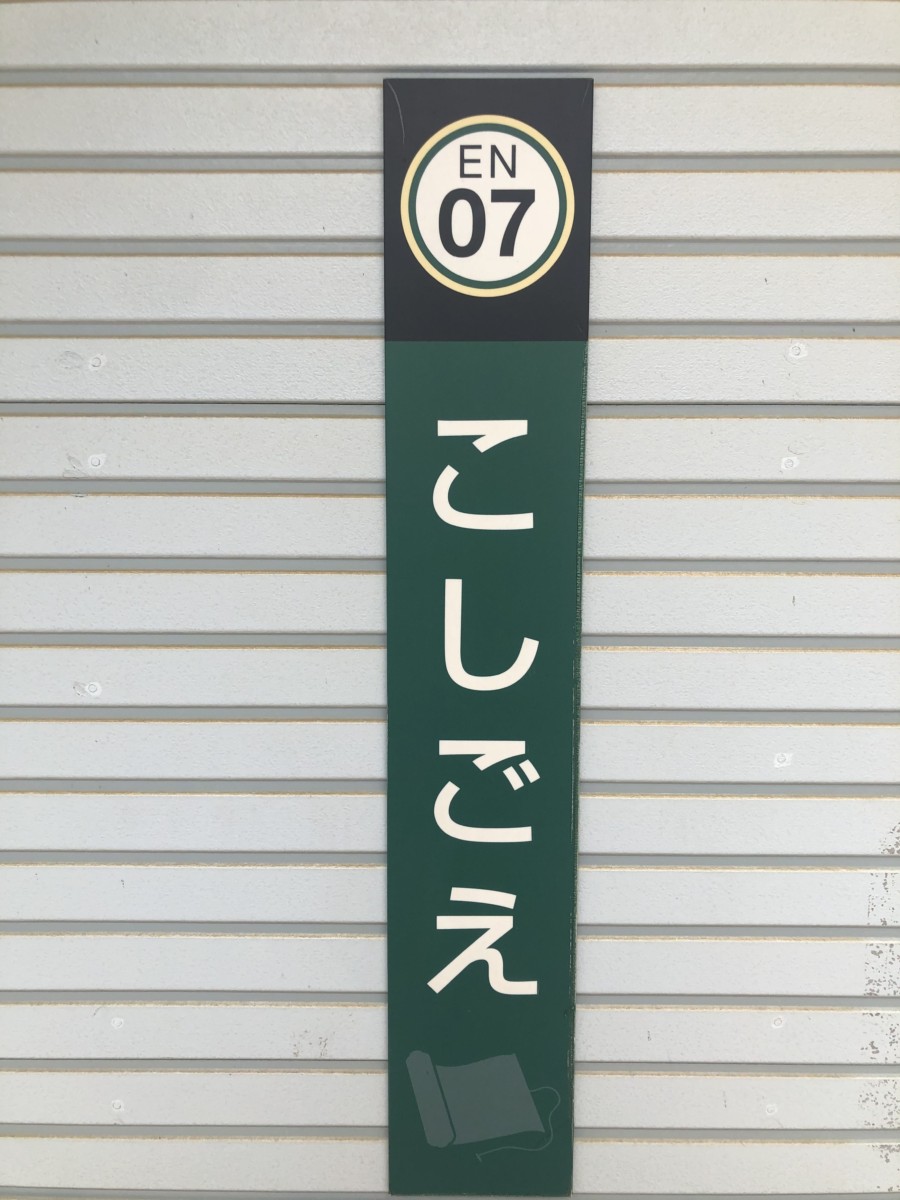
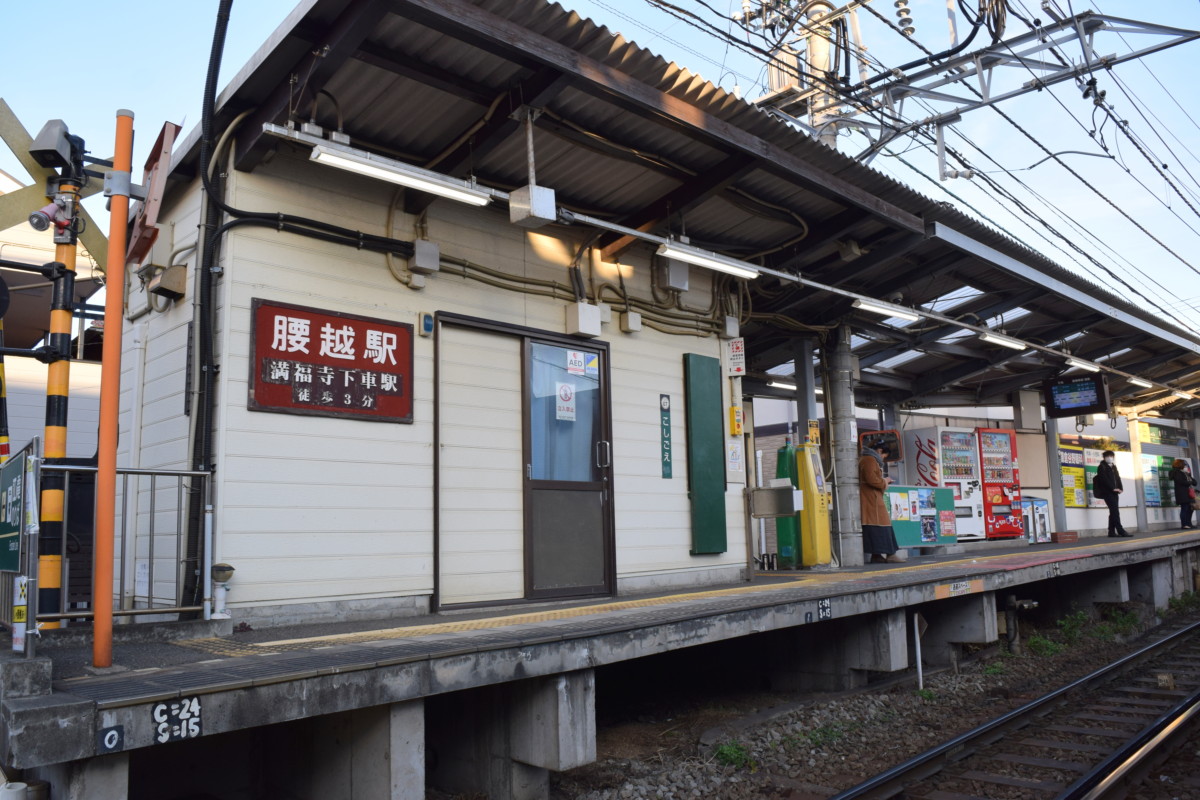
All About EN07 Koshigoe
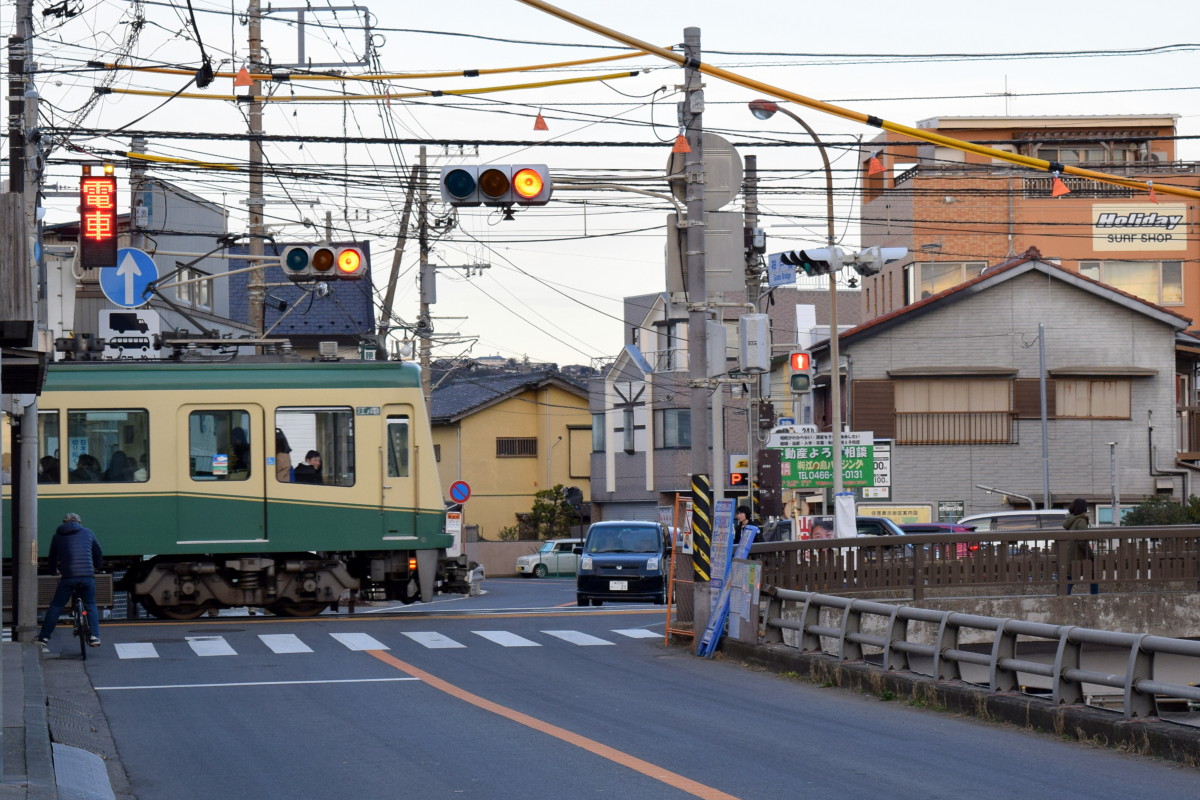
The section of track from Enoshima to Koshigoe is, as far as I’m aware, the longest part of the Enoden that operates on the road, making the drivers have to pay attention to cyclists, pedestrians, cars and all manner of hazards you don’t typically associate with train tracks.
On the positive side, it does make for some interesting train shots:
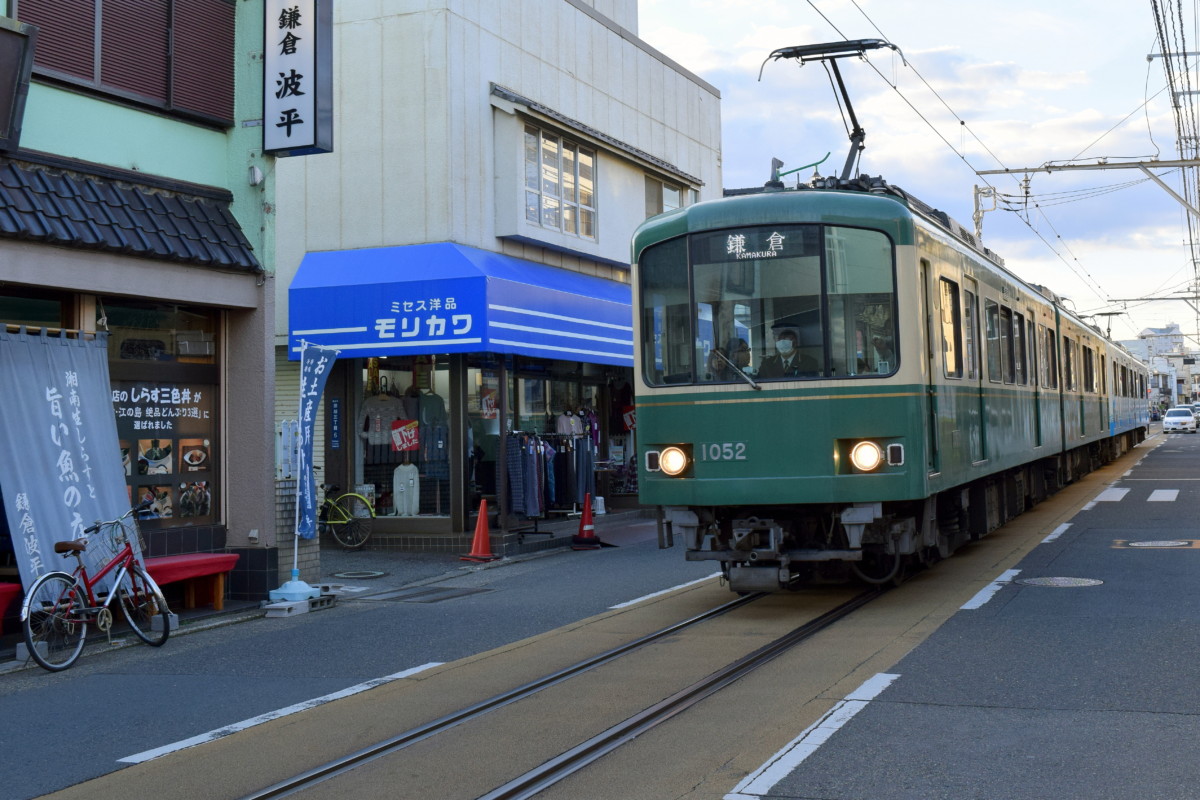
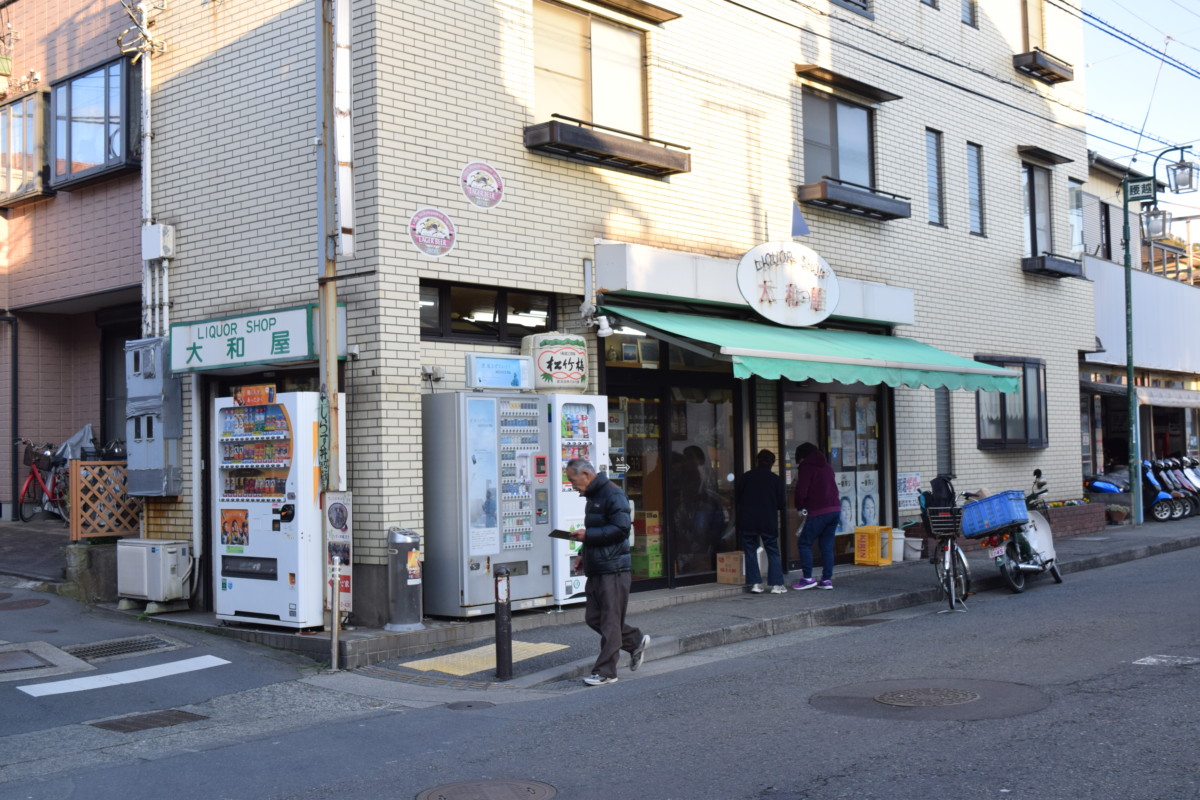
Koshigoe’s got a funky Showa period kind of a vibe to it that mingles with the surfer culture of the area a little, all manifested in a variety of neat little restaurants of differing fare opposite the station.
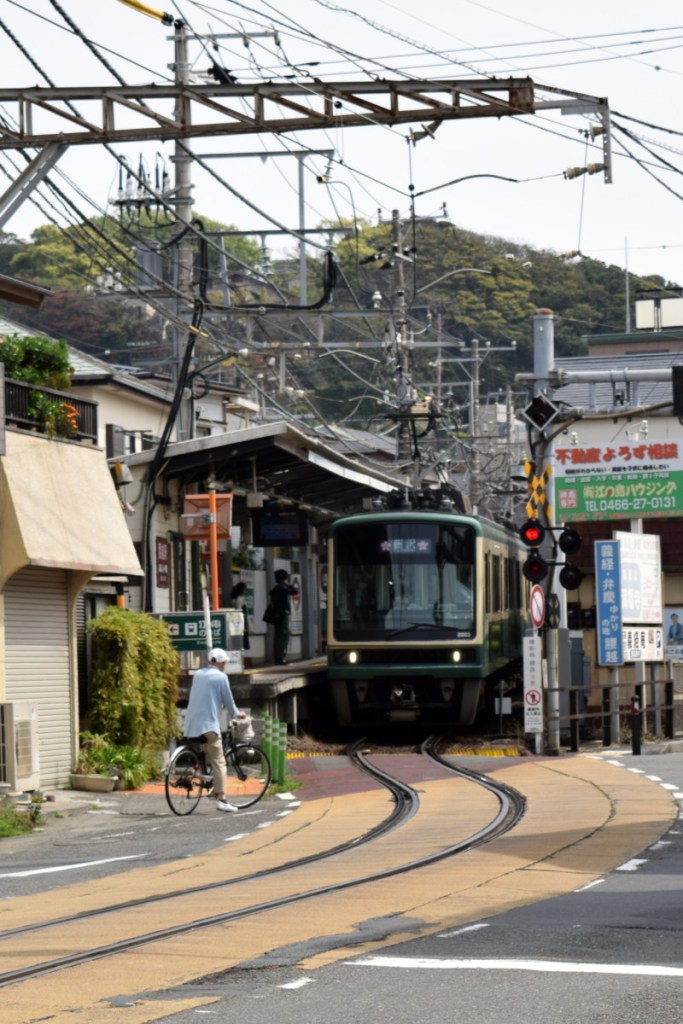
Further along the road, tucked up a side street, there’s one of Koshigoe’s main claims to fame and a connection to a previous Enoden Station.
Manpuku temple is where Minamoto no Yoshitsune stayed for a while in 1195. You may remember him as the brother of Minamoto no Yoritomo, Japan’s first shogun, and you may also recall that they had a bit of a spat.
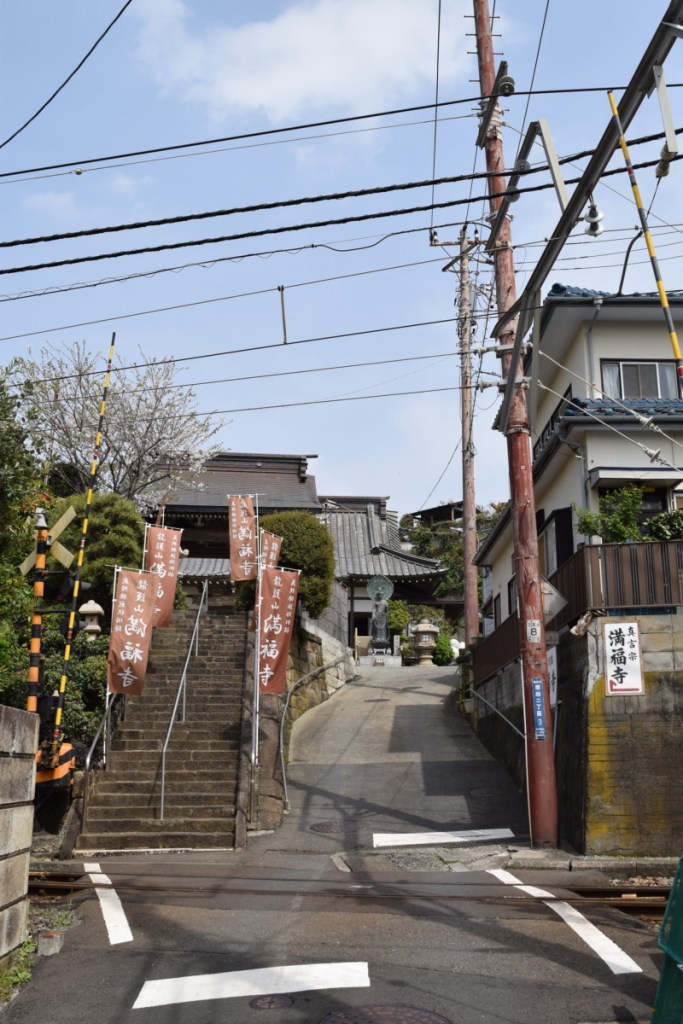
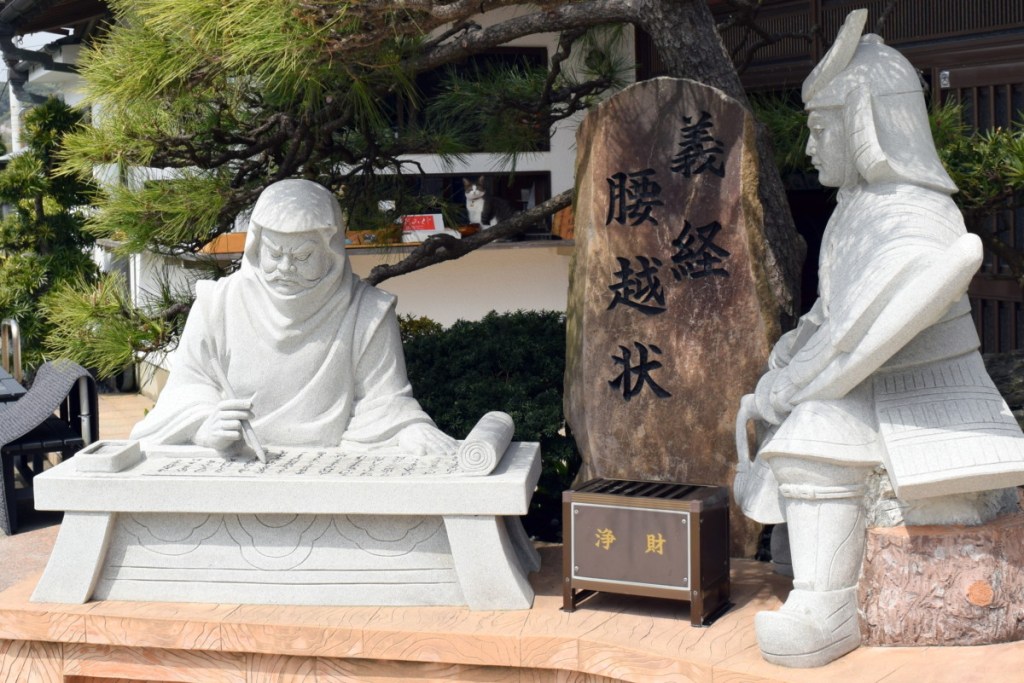
Yoritomo didn’t trust his brother and so had refused him entry into Kamakura. Yoshitsune waited in Manpuku for about a week, before writing a long letter to his sibling asking for permission to come in.
Yoritomo wasn’t swayed by the wordsmithery so Yoshitsune ended up moving on. His life would, not long after, come to a violent end and his head – possibly – floated along a river to Fujisawa, popping up in a well. (As seen previously.)
Manpuku has really only this story going for it in terms of interest, as you may gather from the statue:
There is a bit to see inside the temple but I didn’t go in, owing to the pandemic. This post at JREF has some cool information about the interior.
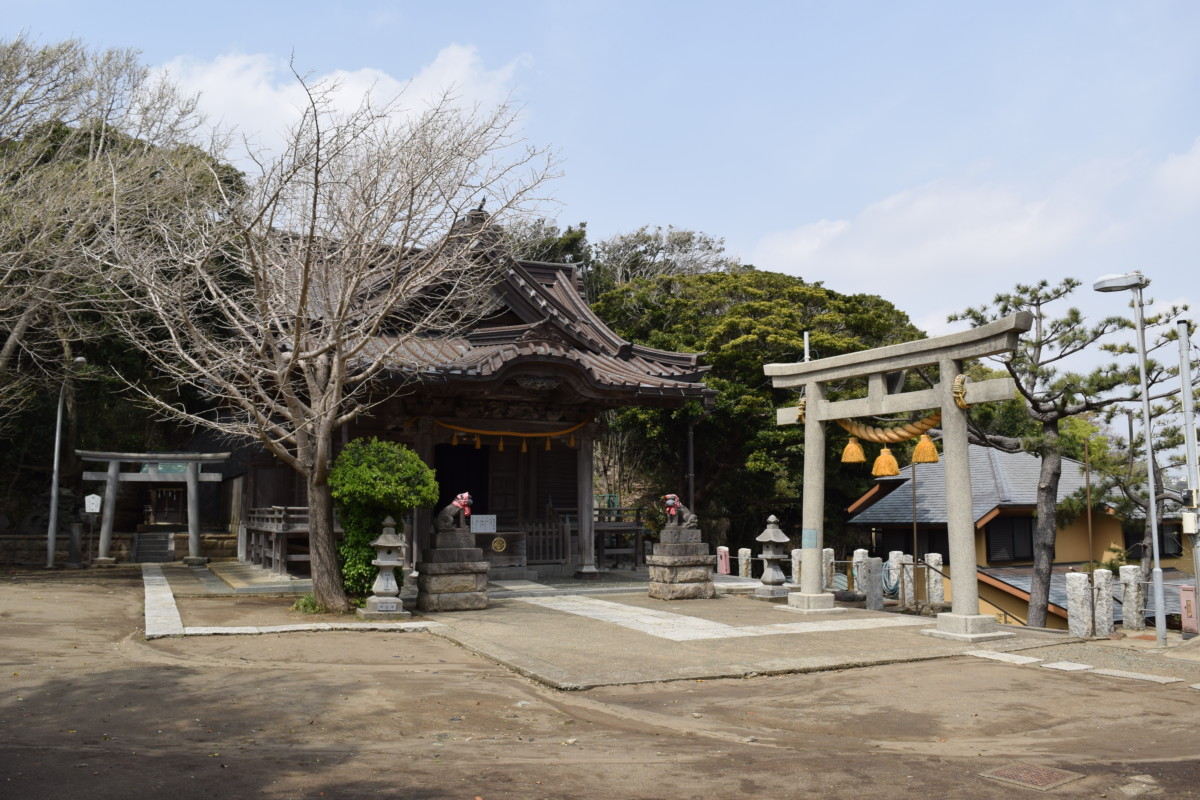
The other place of note in Koshigoe is a small shrine about a five minute walk from Manpuku on the other side of the road, on top of Koyurugi Cape looking down on the ocean.
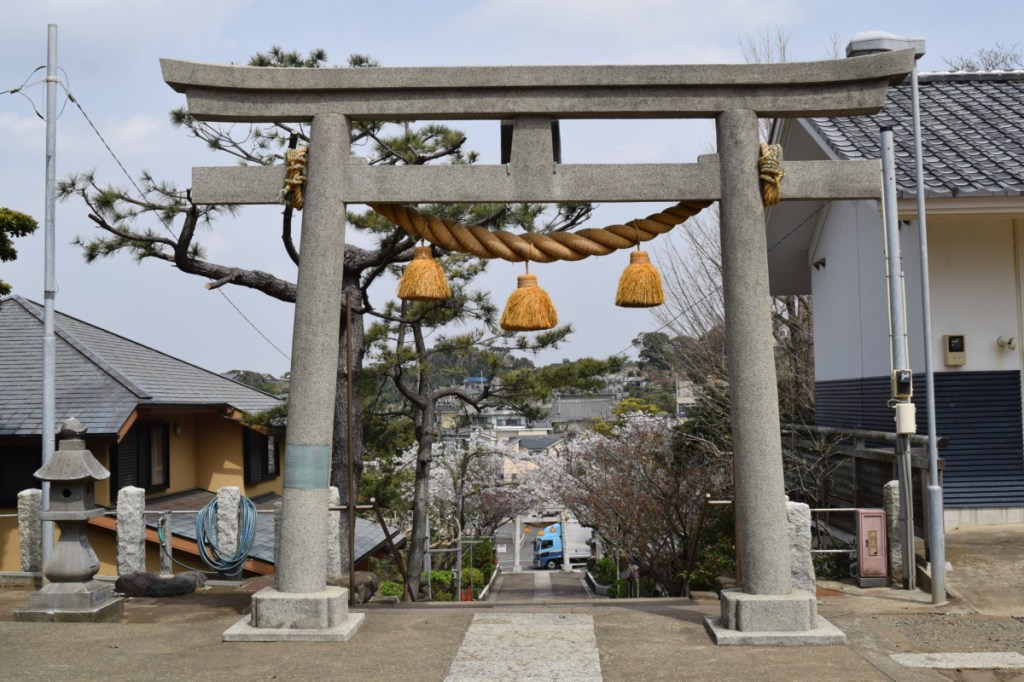
An information board in the grounds tells you that koyurugi means to shudder or quiver, and so Koyurugi shrine takes its name from a pine tree that once stood on the cape and would move even when there was no breeze.
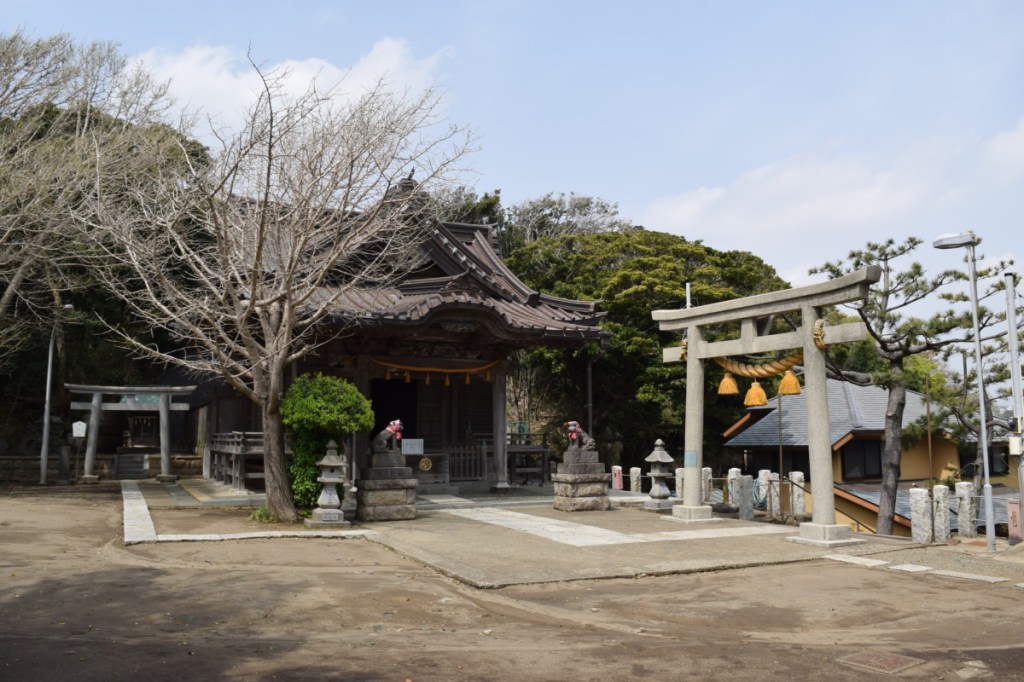
The sign also explains that legend tells us the builder of the shrine was Sasaki Moritsuna, a follower of Minamoto no Yoritomo (you know, the guy who wouldn’t let his brother into Kamakura… oh and Japan’s first shogun.)
It’s also, according to the sign, the place where Nitta Yoshisada prayed before launching an attack on Kamakura in 1333; a fight which he won, taking back control of Japan from the Hojo clan in the process.
Much, much later on in its history, this shrine was an observation point for monitoring the coming and going of foreign ships once Japan started to reopen in the 19th century.
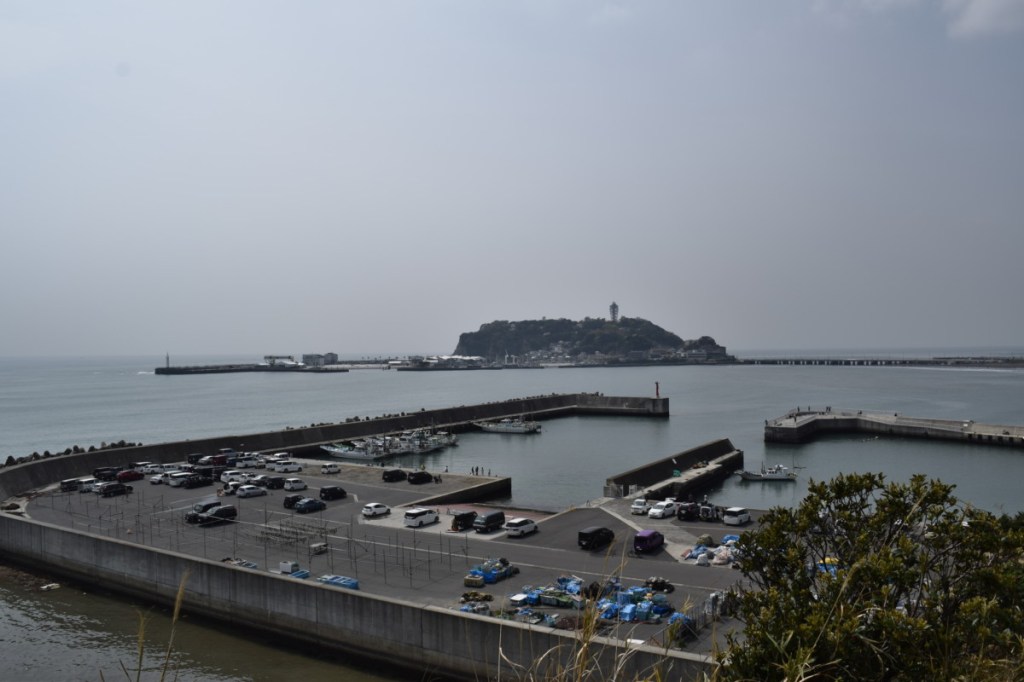
Nowadays, it sits next to a main road but remains largely undisturbed by the artificial noise of the traffic; it remains surrounded by trees on all sides, except for where the cape falls away down to the sea; from there you can hear only the soft swell and gentle crashes of the waves on the rocks beneath.
An occasional bit of birdsong might come your way too, if you’re lucky.
It’s certainly an auspicious place to pray for success in any ventures you might be considering, but I’d suggest against laying siege to Kamakura. Rather a large undertaking that.
EN07 Koshigoe Gallery



 CityHillsAndSea
Leave a comment