The Enoden links Fujisawa & Kamakura via a coastal route that gives both those cities access to the little island of Enoshima – hence the name. It’s a charming, old-fashioned trainline, with some really interesting sights to be seen along the way.
Click this link for more info.
Local Sights
Hase is home to a couple of Kamakura’s big hitters, touristy wise. Both of these belong to the Jodo Sect of Buddhism, and you’ll definitely know one of them – Kotoku-in – as it’s home to the Big Buddha, one of Kamakura’s more internationally famous symbols.
The other temple is perhaps less well-known, although it should be – Hasedera houses a wooden statue of an eleven headed kannon that floated all the way here from Nara. (Well, sort of.)
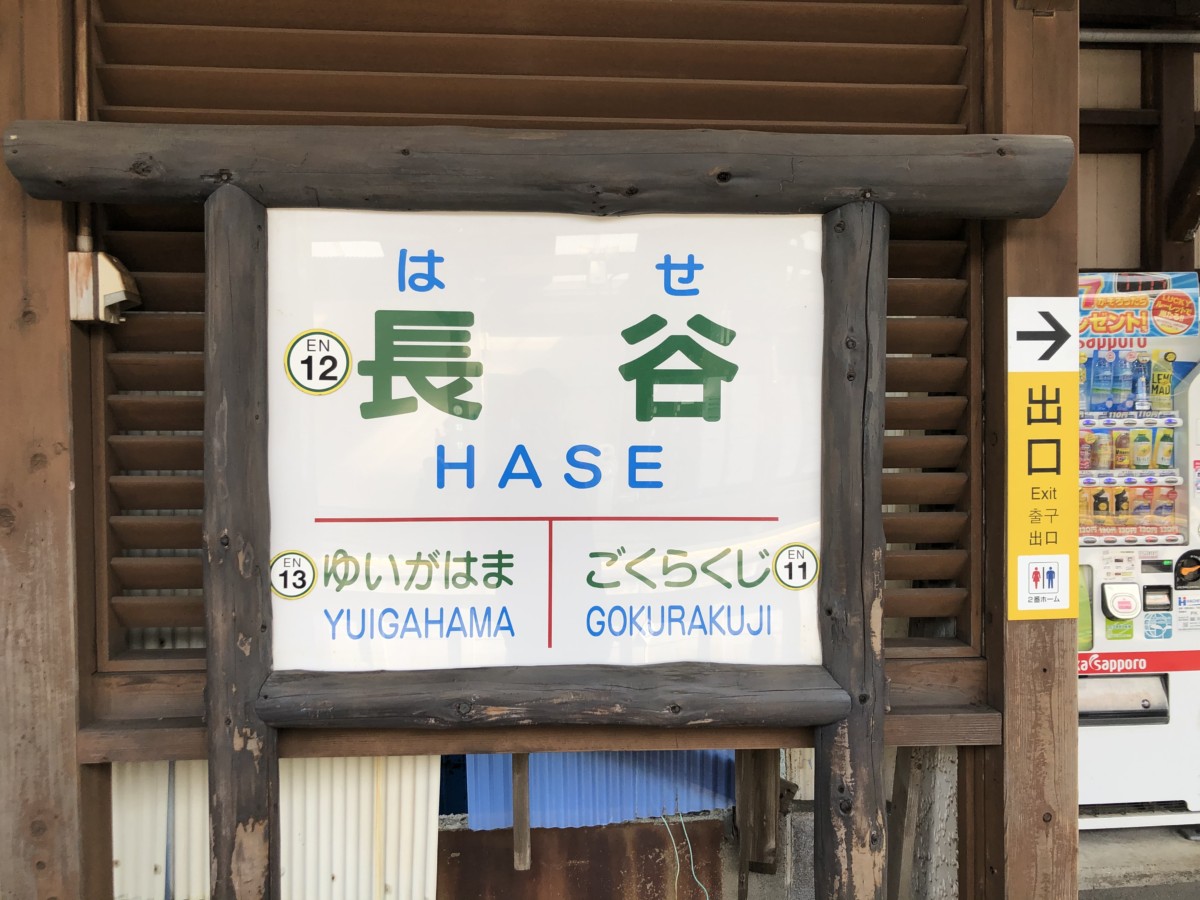
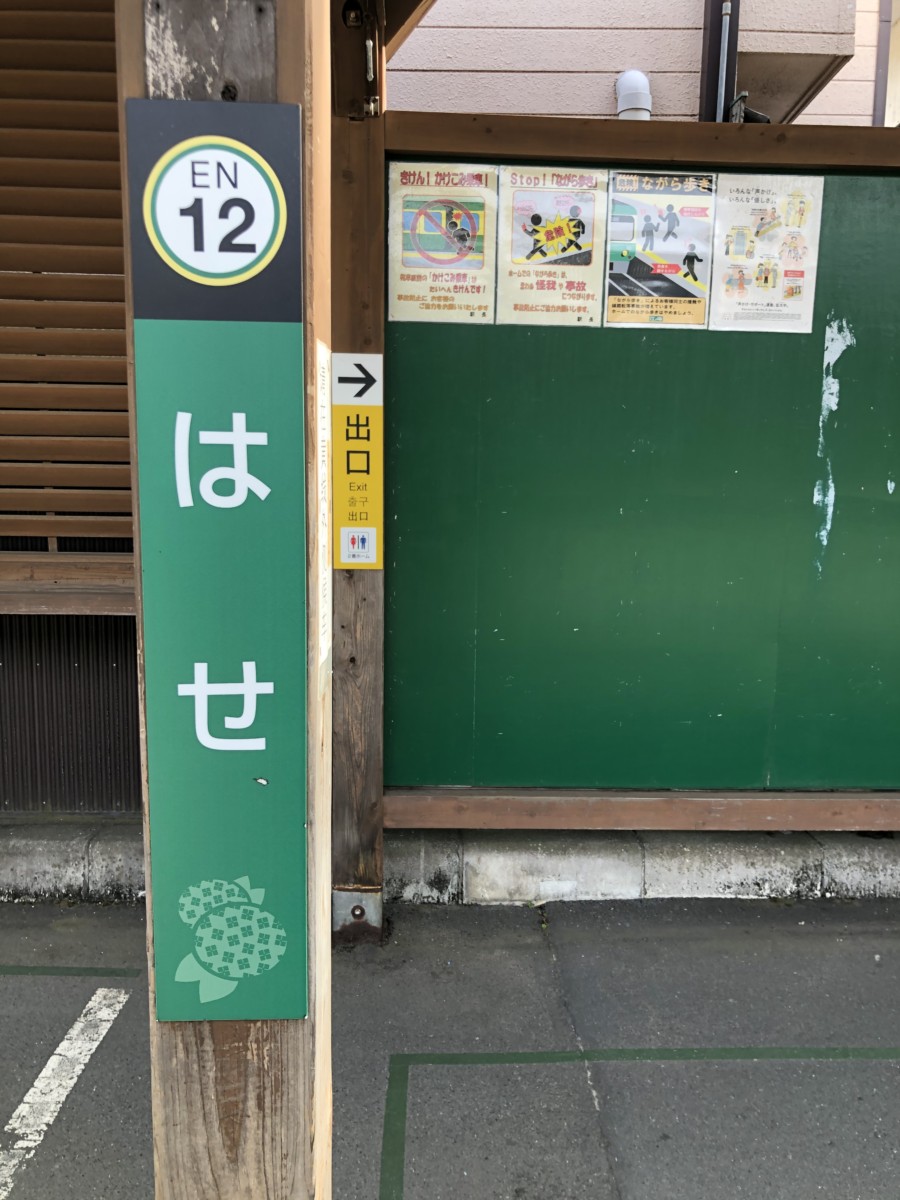
All About EN12 Hase Station
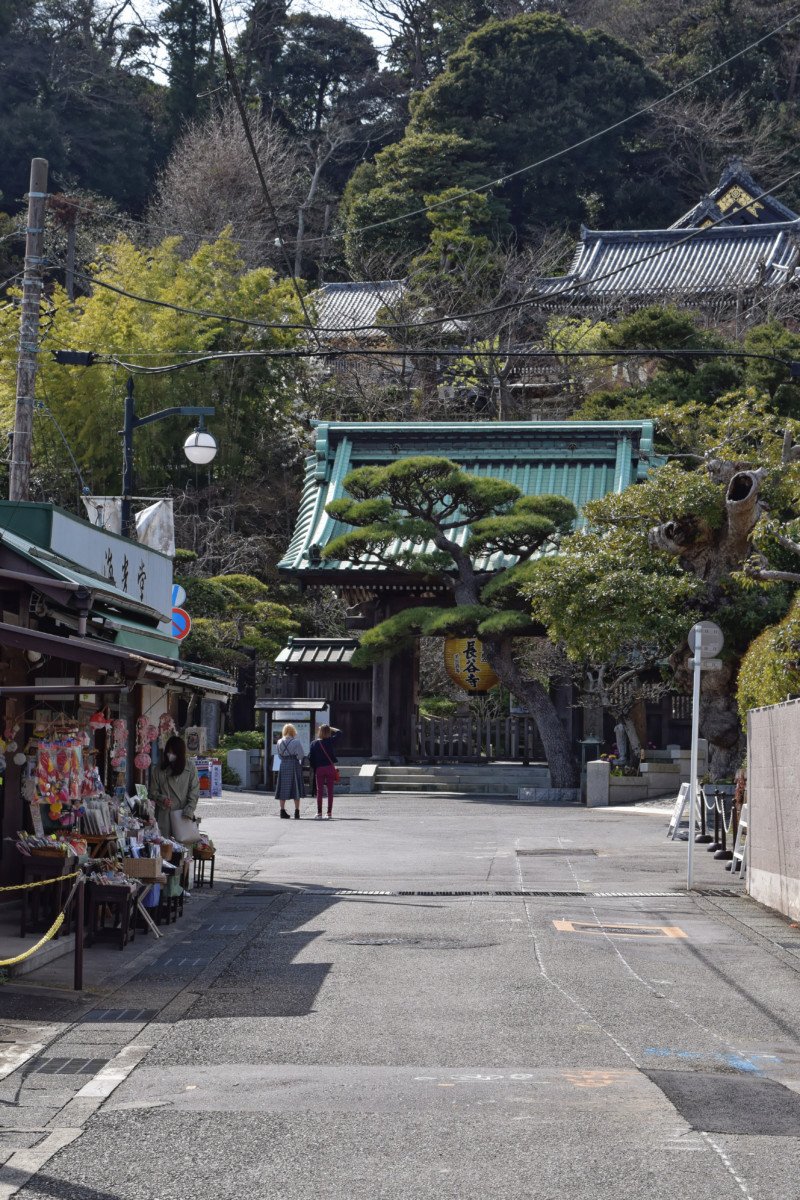
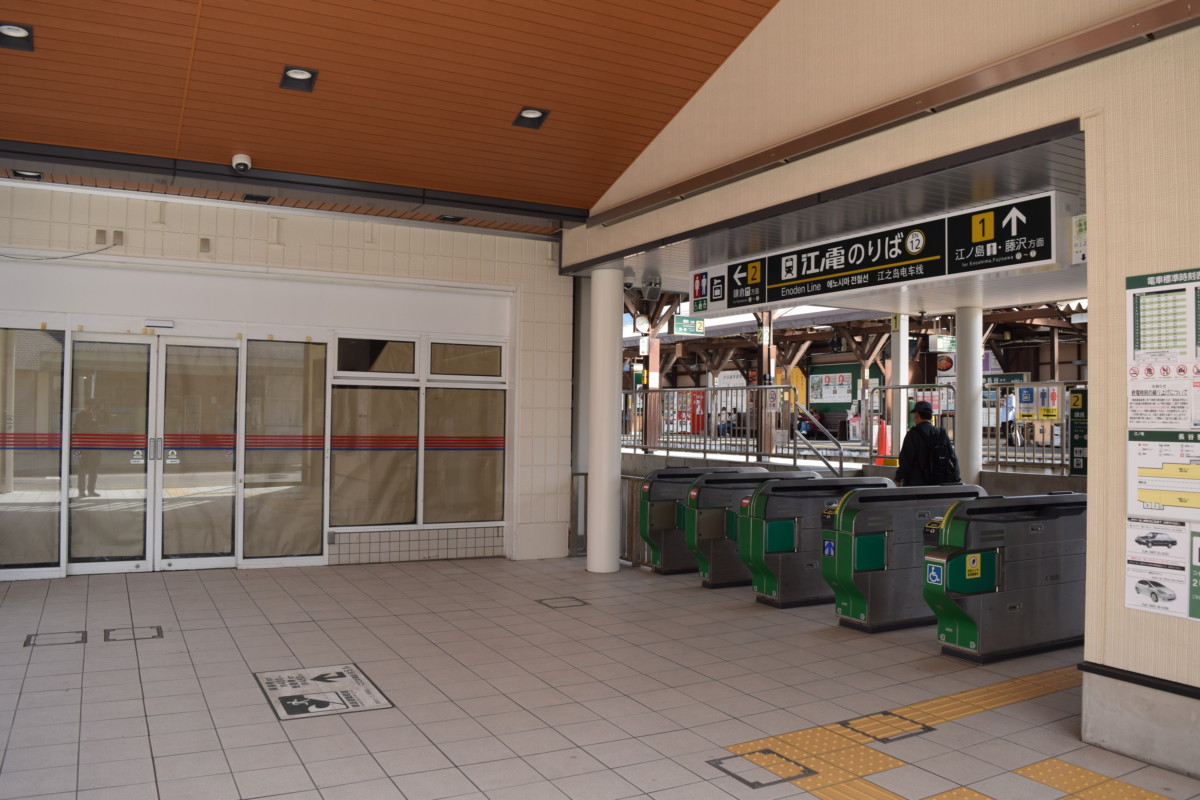
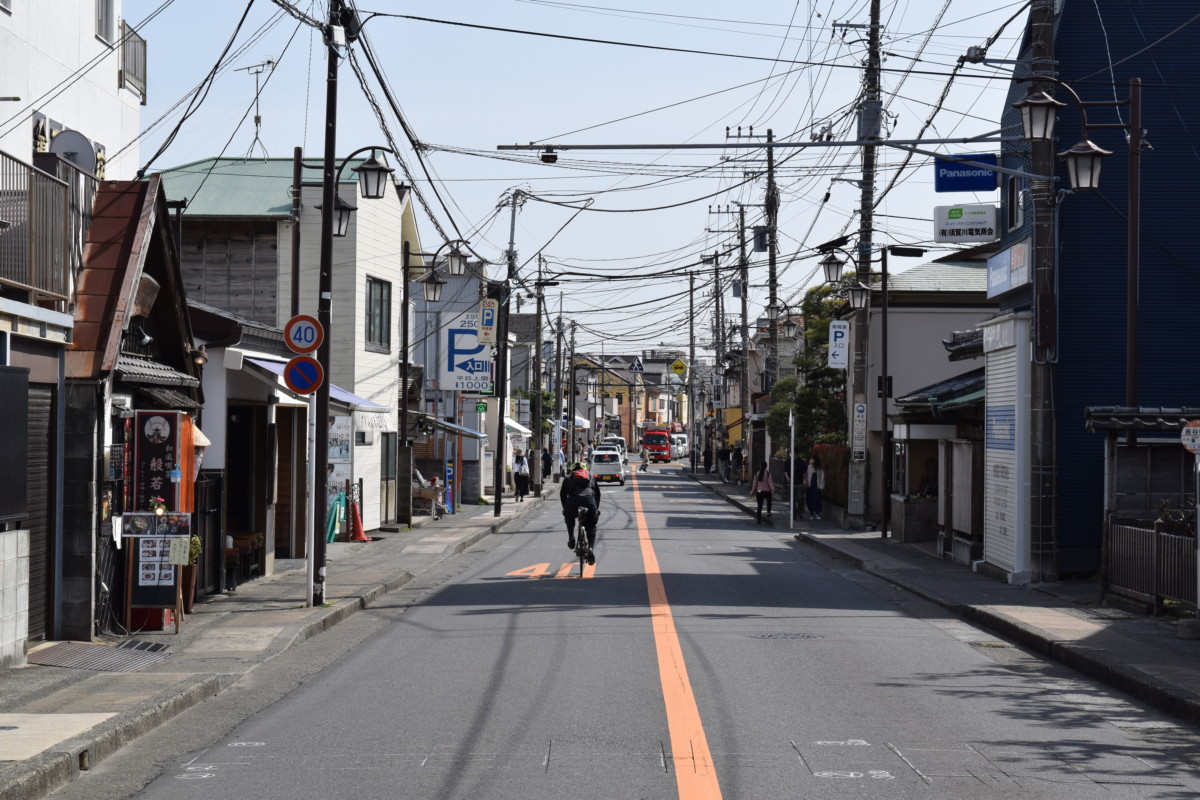
This trip to Hase was, like most of these Enoden visits, taken during the pandemic and it was surreal how empty the place was. I’ve cycled down the main station drag before on pretty much every day of the week at a variety of times and I’ve never seen it as empty as this:

I didn’t have a whole lot of time available to me, so the images of the Big Buddha you can see in this post are taken from a previous trip down this way, when the world was a lot more populated and Japan was allowing foreign visitors, even if they weren’t athletes.
The daibutsu, for so the Big Buddha is named, is an 11 meter tall copper statue of amida-butsu. He’s smaller than the one in Todai-ji down Nara way, but you can’t go inside that statue, so you know – swings and roundabouts.
Kotoku-in’s buddha was built some time in the 13th century & used to be enclosed in its own house – but a couple of typhoons, an earthquake and a tsunami later and he’s very much the last man standing. (erm, sitting in this case, I suppose.)
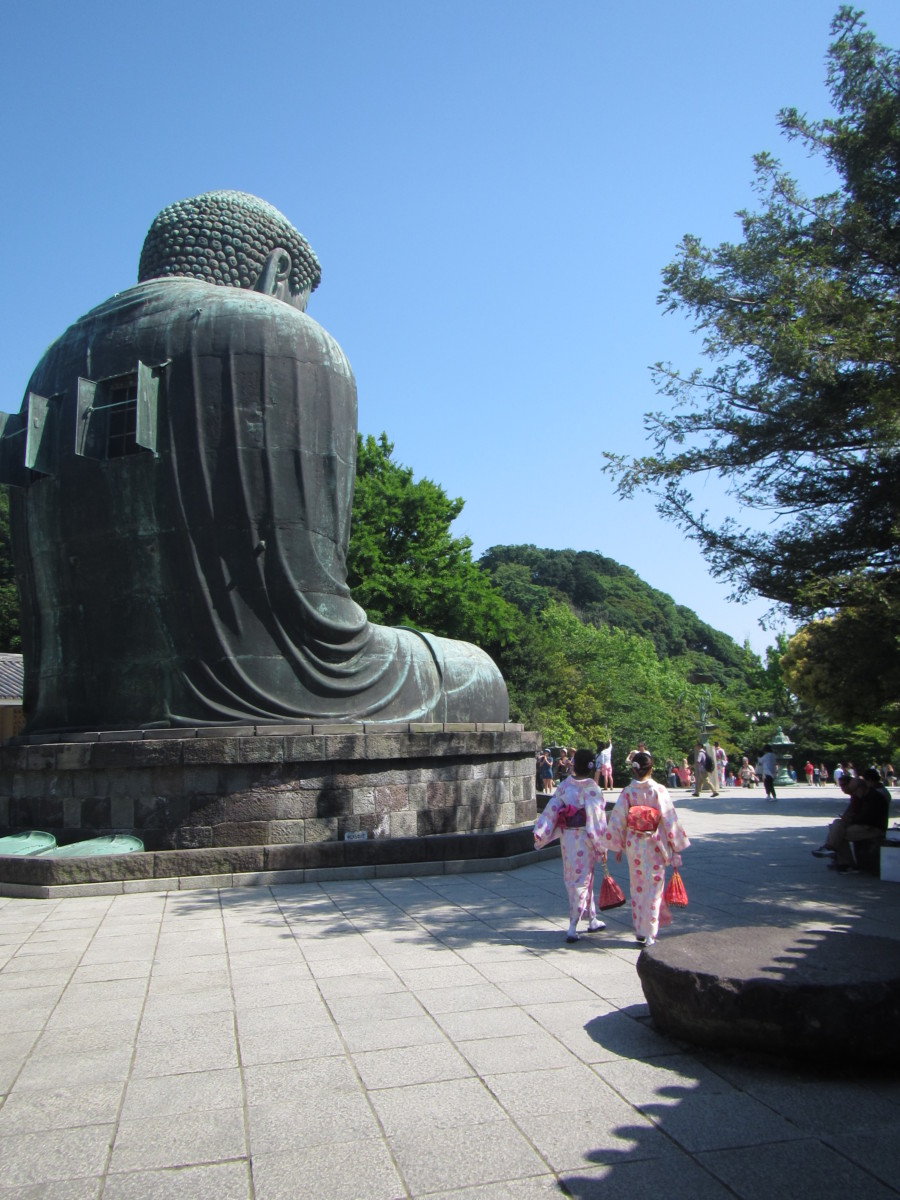
After paying your respects to the big fella, head back towards the station, and you can find the entrance to Hasedera up a non-descript side street.
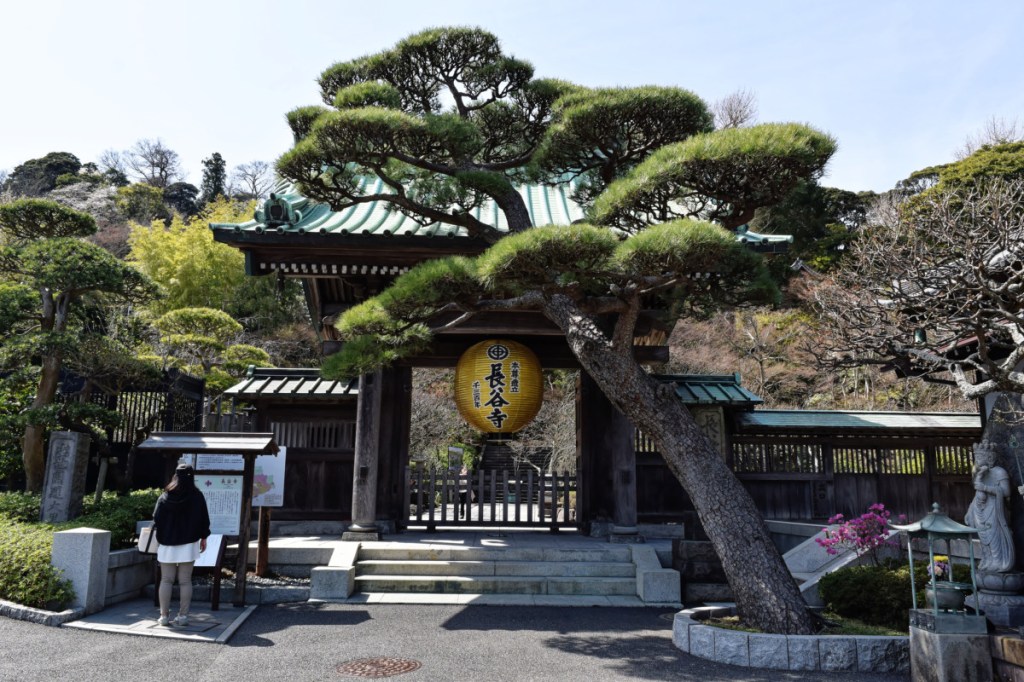
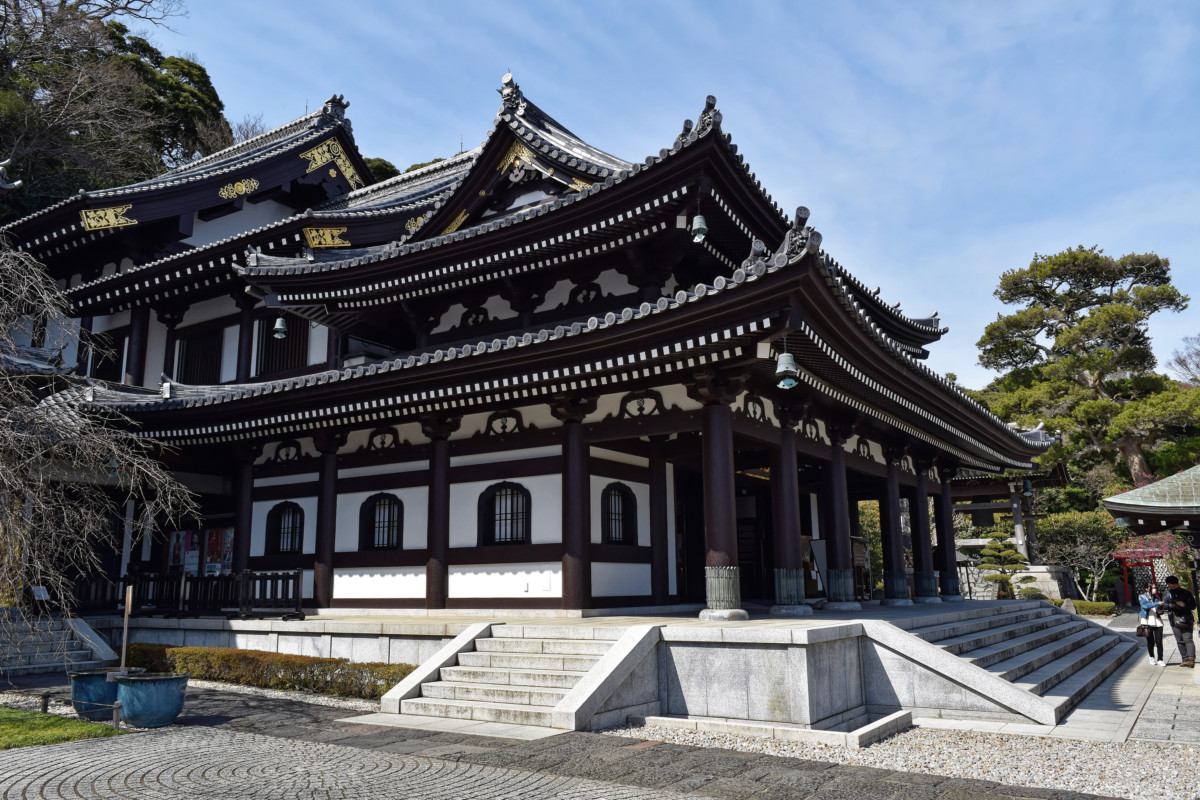
Hasedera is a collection of little sites all on the same grounds that reach up the hillside in the direction of Gokurakuji. The reasons for its existence connect us, yet again, to Nara – although this time not in some height measurement competition, rather a twin temple kind of a deal:
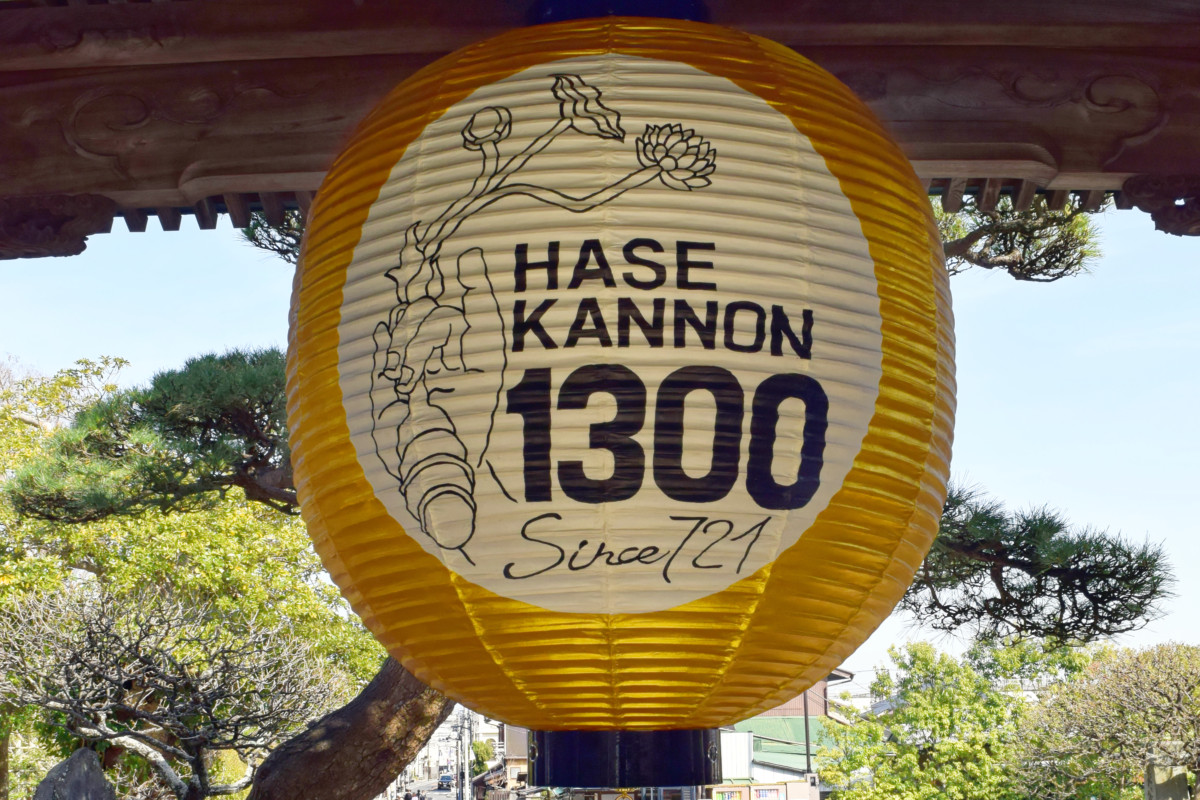
According to the legend, in 721 AD, two Kannon statues were carved out of one sacred tree in Hatsuse (in the present day Nara Prefecture). One was enshrined at the Hasedera temple in Nara, the other was thrown into the ocean with a prayer to make it reappear and save people elsewhere. After the Kannon statue traveled across the waters for fifteen long years, it finally washed ashore in a place in the present day Kanagawa Prefecture. In 736 AD, the Hasedera temple in Kamakura was established to enshrine the Kannon statue.
from the INTRODUCTION page ON Hasedera Temple’s Website
Unfortunately, you’re not allowed to take pictures of that, so you’ll just have to trust me when I say it is very impressive.
Other attractions on the grounds include a veritable army of jizo :

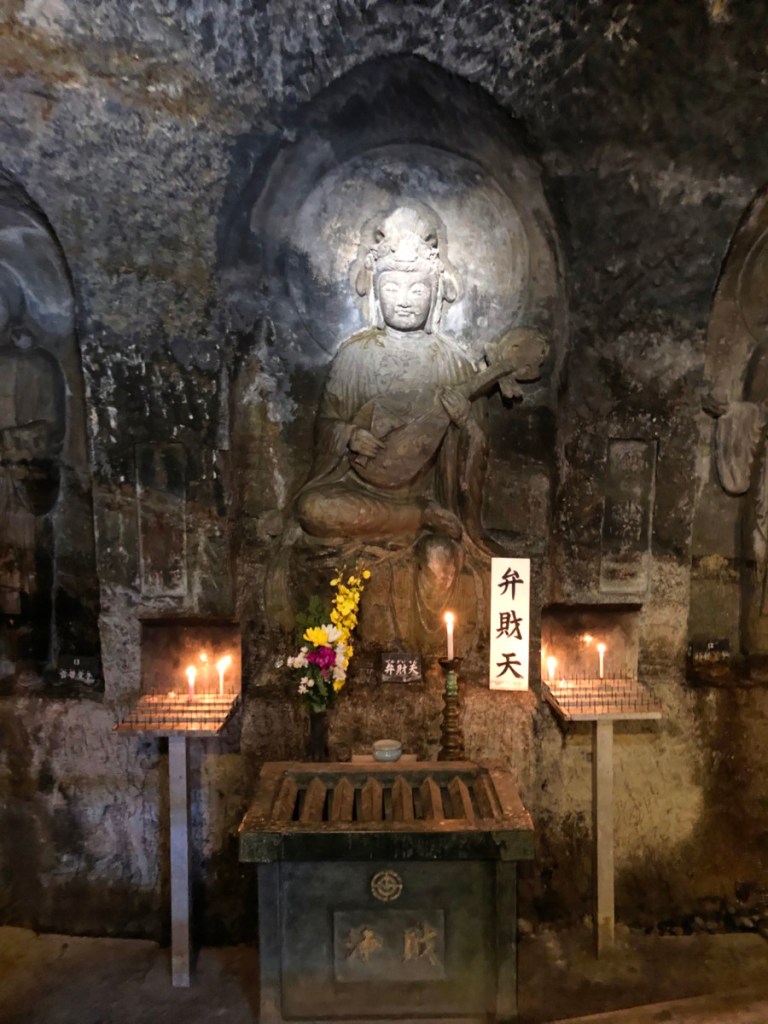
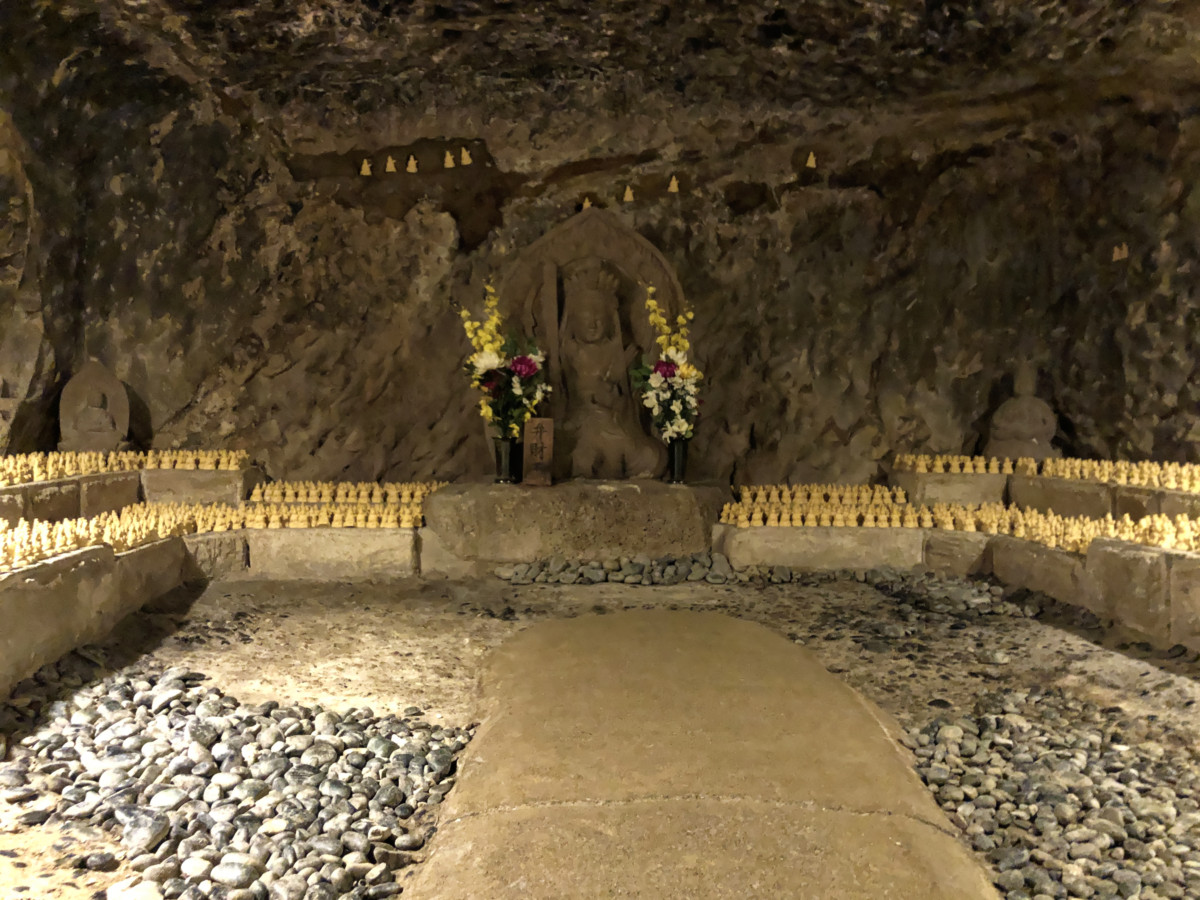
There’s also a very low cave which houses a statue of Benzaiten, goddess of music, and Enoshima’s preferred deity :
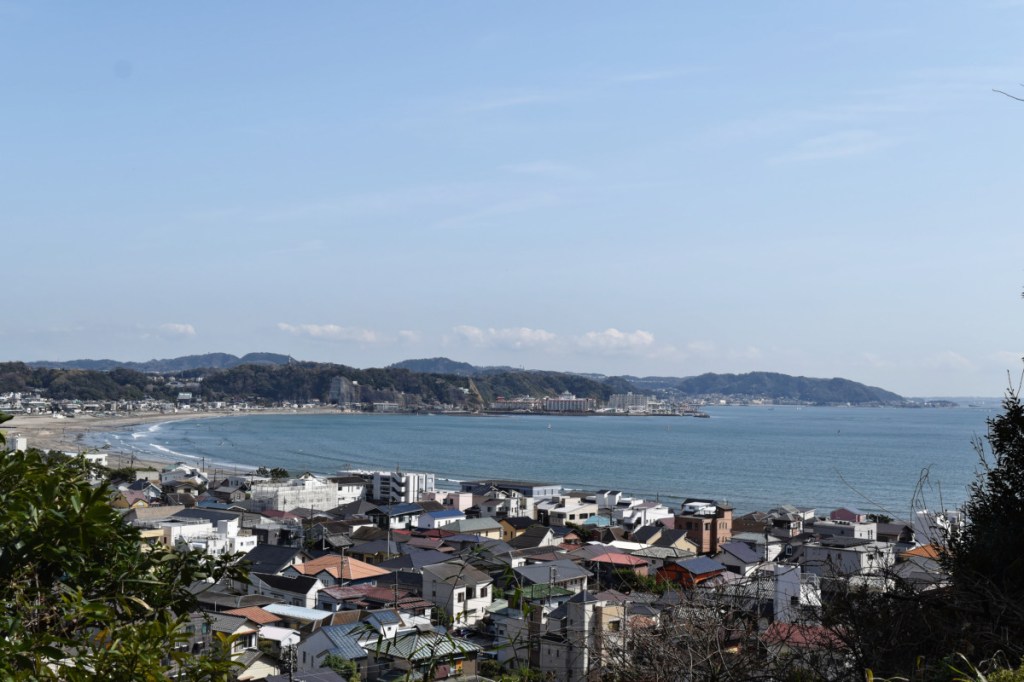
Finally, if the spiritual nature of things and the gardens themsleves aren’t doing it for you, there are some magnificent views of Yuigahama:
EN12 Hase Station Gallery



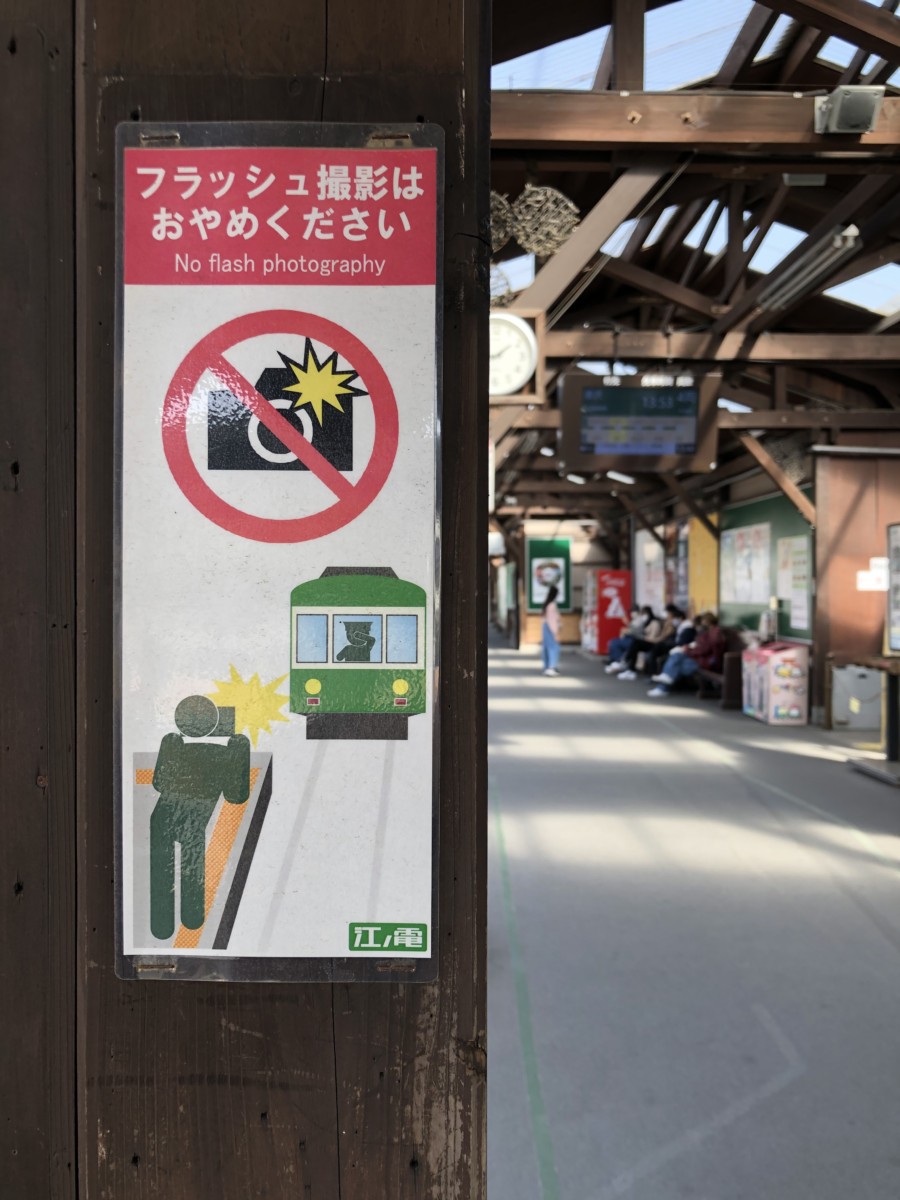
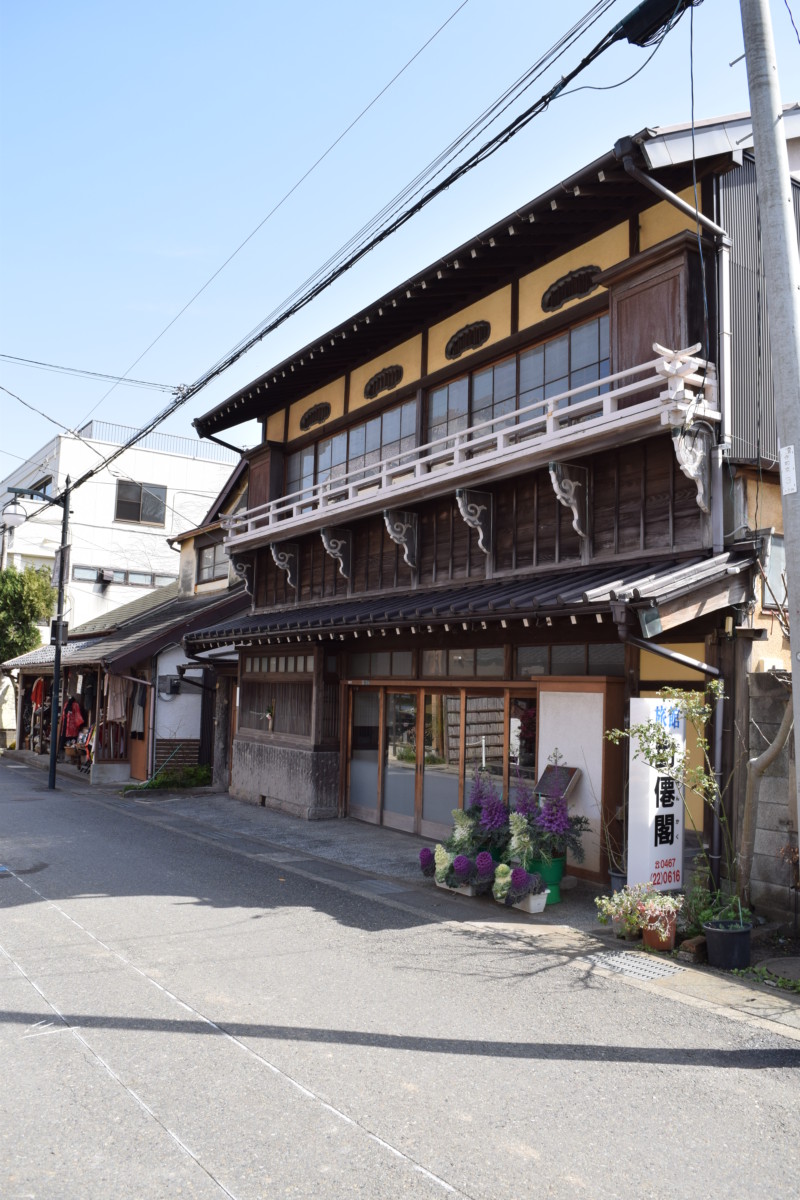
 CityHillsAndSea
Leave a comment