
Libraries have, since I was a child, sparked some desire for learning in me, some avaricious need to acquire a whole new bunch of knowledge through silent study. Preferably alone and with a big pile of books.
(The books need be of varying genre and of assorted scent; I’m relatively Catholic when it comes to my reading matter. Old and preowned, pulled from a charity shop bargain bin, does just as much for me as freshly inked and crisp, straight from the bookshop. Just as long as my book is giving off some familiar fragrance, I’m happy.)
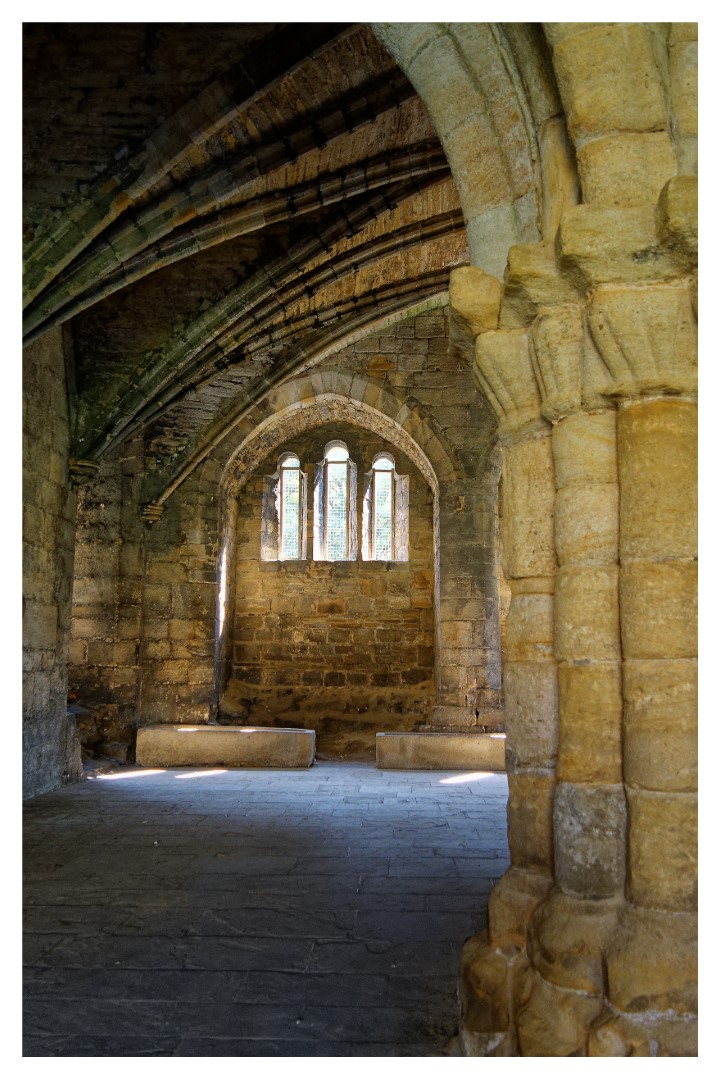
Abbeys have come over the years to affect me somewhat similarly to libraries, although the effect has been more of a gradual development; the more I’ve learned about them, the more the little study spark starts to ignite. Mind you, the idea of a life of devotion to god isn’t one which greatly appeals to me, even with a lot of books.
Yet abbeys were so much more than just a lot of beatific, becassocked blokes sequestered in sullen avoidance of conversation. I find it intriguing to think that these ruins once housed what would have been a cutting edge research institute. Monks were at the vanguard of pushing scientific know-how in many ways, from agriculture to astronomy to languages and medicine… well, until Henry VIII came along and ruined everything.
I love to wander ruins like those at Kirkstall and think about what day to day life would have been like in and around places such as these. Imagine the comings and goings of the people in the surrounding villages who relied upon trade with the monks. Picture what it would be like sitting by candlelight copying manuscripts, pulling dusty tomes out of storage to help with some obscure question or just beavering away in the garden, planting some flowers for the bees.
 CityHillsAndSea
Leave a comment