Don’t know what a 52 Fuji is? Check out this page.
Mount Fuji shares her name with a river, the Fujikawa. This river gives its name to a former town, now a suburb of Fuji City, which sits right on its doorstep, and stretches out along the bank of that river for what seems an eternity. You could be forgiven for thinking that Fujikawa was only one street, ranged up along the bank of the river.
There really should be a bit more to the place, I grant you. It is, after all the site of the famous Battle of Fujigawa. Legend has it that this non-battle took place during the Taira-Minamoto war between 1180 and 1185. A Minamoto scouting party startled some geese, which in turn startled the Taira troops who in turn ran away. They were eventually to lose the war, and with courage like this, I can’t say I’m surprised. Minamoto would take control of Japan, set up a military government and begin the Kamakura period. This was a country shaping moment, this battle. Although, since it never really happened, there’s nothing to see.
The only other thing Fujikawa was famous for at the time was the Rakuza, a motorway service area. Not much point going there unless you’re in a car and you need a wee. Mind you, it does have great views of Mount Fuji…
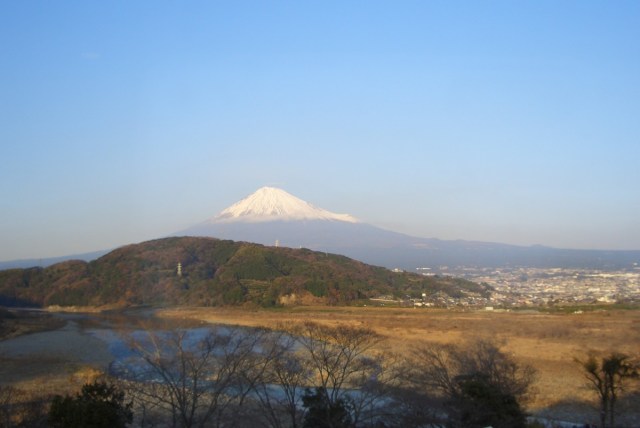
…. and I’ve heard it has a Ferris wheel nowadays.
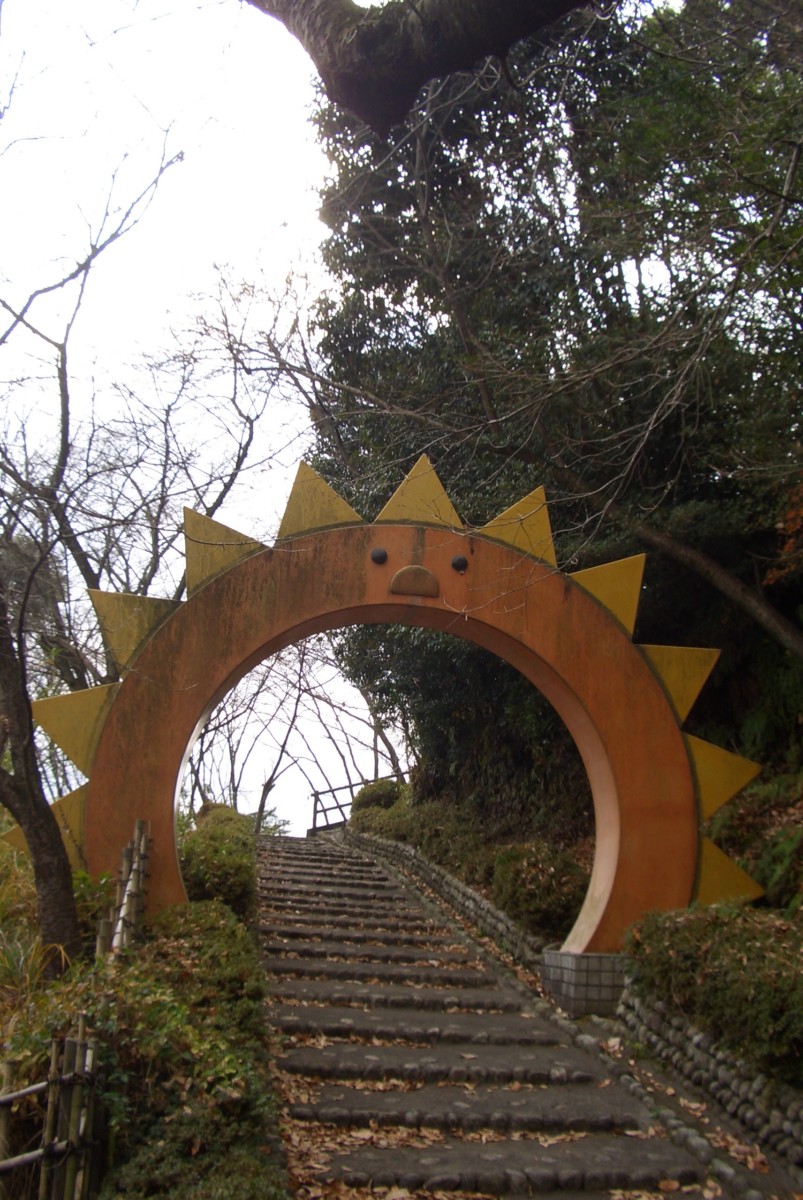
If you wander up into the hills, however, you will discover Urayama Park, home to a weird monument. Its a homage to something in Japanese, but people I’ve asked couldn’t read the kanji. It could be a monument to the biggest John Waters fan in Fujikawa. It could be a monument to the smallest sandwich ever made. It could be instructions on how best to honour the Sun God, who also has an altar up in these hills.
More traditional religion could be found in the way of a temple off to one side of the park, which even came with a touching pet cemetery, the first I’d ever seen in Japan, and I haven’t really come across many since. This might also explain why I haven’t seen any eerily aggressive cats, spooky little kid zombies trying to kill Herman Munster, or even a reanimated Denise Crosby.
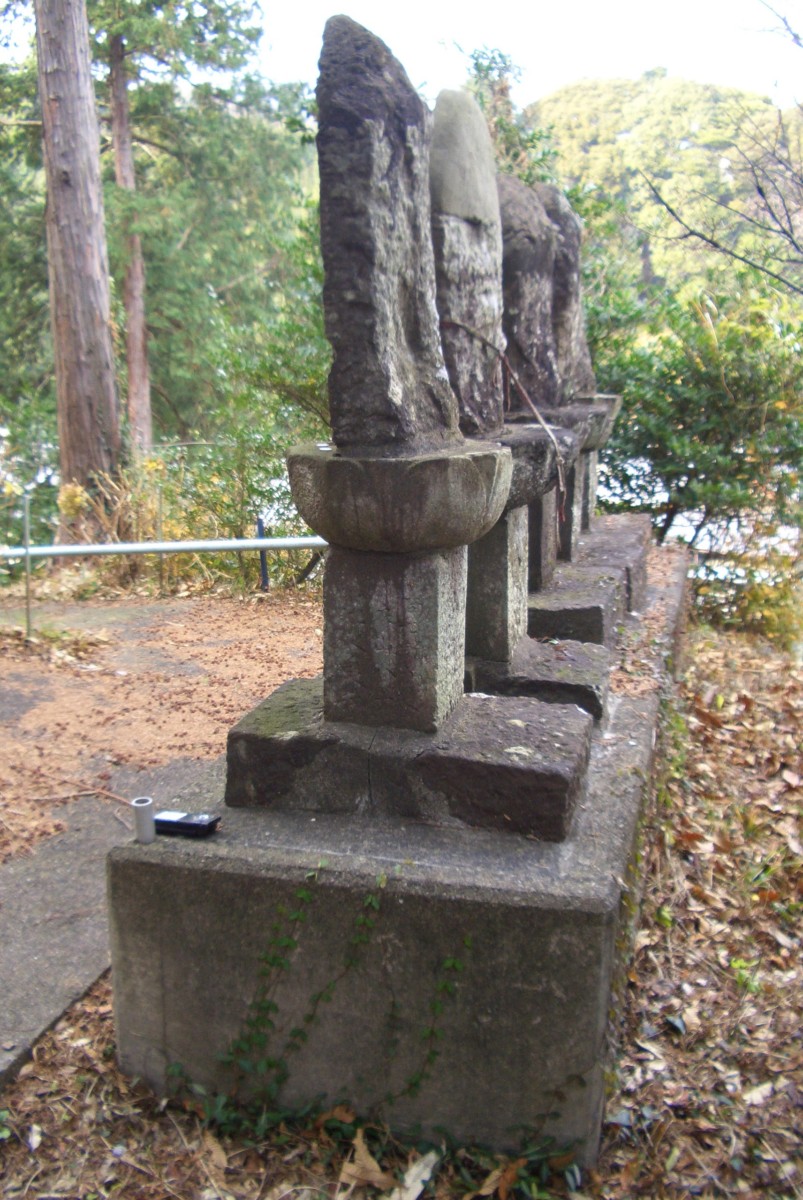
Another feature of the temple was the winding path that led up the hill again, along which were dotted 33 statues. These statues had money on them, mostly, although one of them even had a broken phone and a dead vole in front of it. I made sure I said a prayer here, since it was obviously popular with all sides of the community.
The idea of this route is to pray in front of each statue, to help you focus your mind. It wasn’t until I found the way out that I realized I’d done the whole thing backwards. Fortunately, this did not mean that I became less focused. Or maybe it did. I’m not sure. In fact, I can’t clearly remember the whole thing that well.
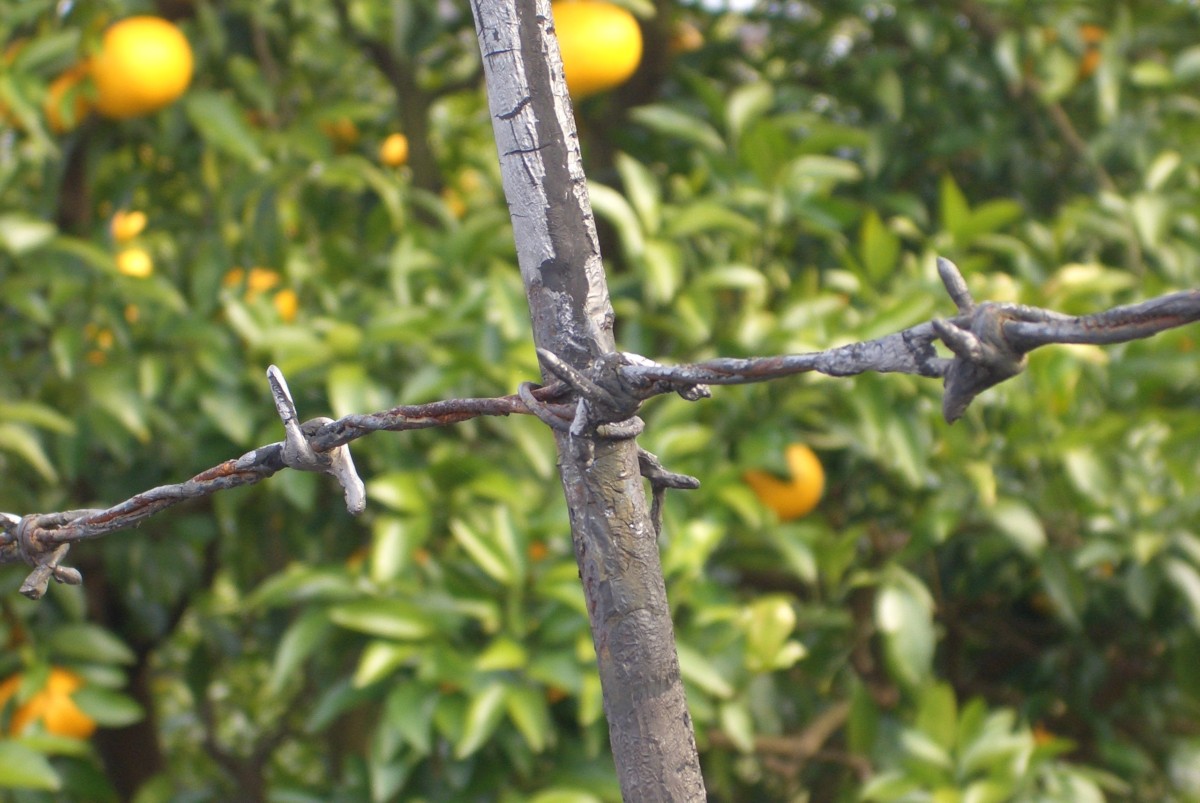
Once out of the temple, I happened across some barbed wire guarding some oranges. I got what looked like a nice shot of the barbed wire, then turned round to see an old woman smiling at me.
She asked me how Mount Fuji was looking today.
It was cloudy. The barbed wire I had just been photographing was in the opposite direction to where Fuji is. Still, she was trying, so I did too.
“Unfortunately, I can’t see it.”
“That’s too bad.”
She smiled and we both walked off in opposite directions.
FUJIS LEFT AT THE END OF JANUARY 21st, 2007 : 47/59
 CityHillsAndSea
Leave a comment