There are more than a few steam locomotives sitting in parks across Japan, enjoying their retirement.
I wanted to acknowledge the ones I happen across for all their hard work, so I started the Static Life Steam Locomotives Project, SLSL for short.
A map of the Static Life Steam Locomotives & more about the project is here.
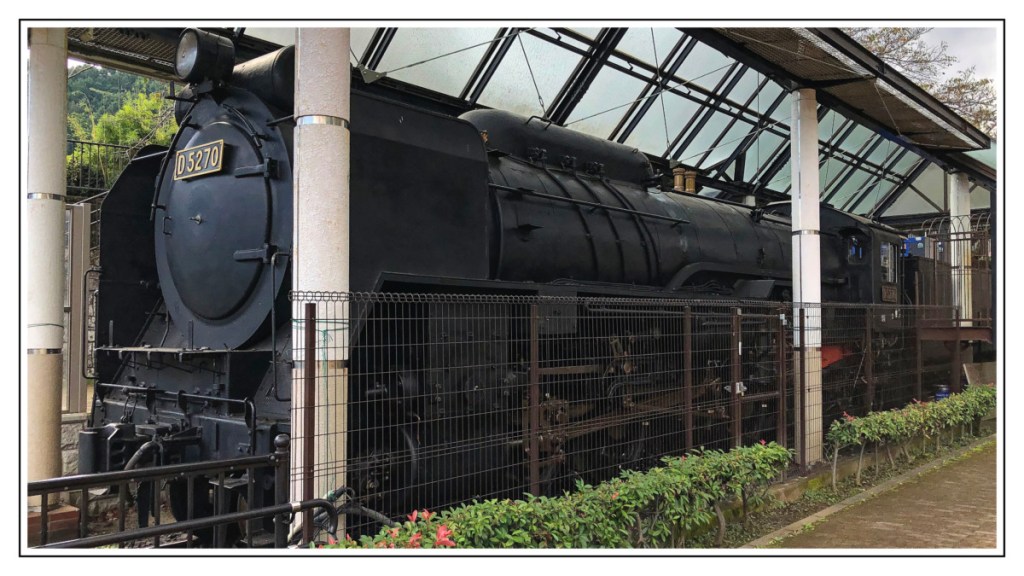
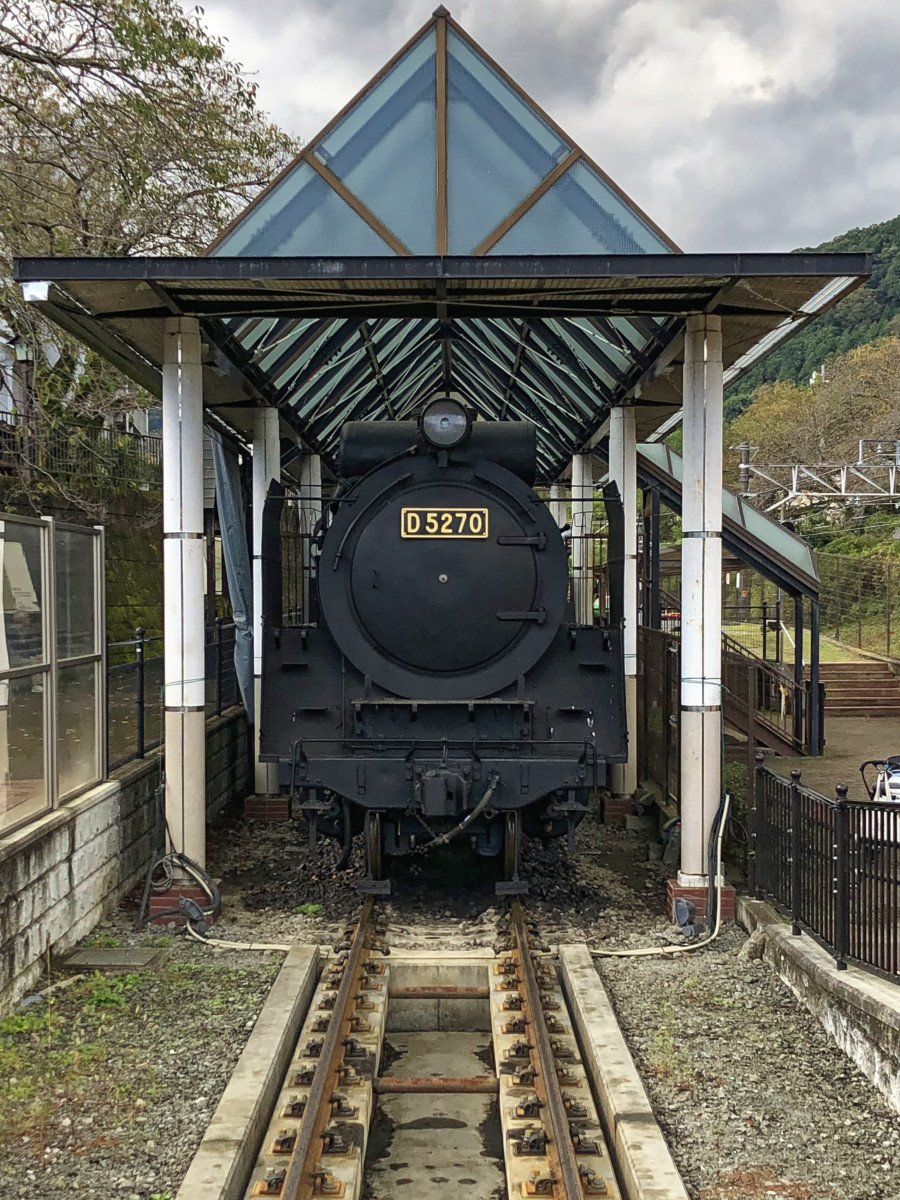
D52-70 – one of only seven surviving steam trains in this class – lives in a little park next to the station in Yamakita, a tiny town right on the edge of Kanagawa, not far from the neighbouring prefectures of Shizuoka & Yamanashi, where not a whole lot happens. Nowadays, it sits on the Gotenba line but at the beginning of its life, Yamakita saw a lot more action as a hub on the Tokaido line.
If you’ve ever taken the Tokaido line from anywhere east of Atami to anywhere west of Atami, you’ll probably know that the train disappears into the mountains for a good long time. You might not know that this section, just after Atami and just before Kannami, is the Tanna tunnel, specifically built to shorten the time the Tokaido line took to get to Numazu and beyond.
(The Gotenba line therefore is actually the former section of the Tokaido line that snaked around the mountains before this tunnel allowed the trains to pass through solid rock.)
The Tanna tunnel, at nearly 8km, was meant to be Japan’s longest tunnel, but, owing to a lot of difficulties during construction that delayed its completion, a longer one in Shimizu was finished before it. Throughout the 15 or so years it took to finish the thing there were floodings, accidents & multiple collapses, leading to 67 deaths.
I often wonder about the stories that echo through really old tunnels such as these; engineering projects completed, essentially, by a bunch of guys swinging some pickaxes at big chunks of rock in an environment far removed from anything we’d recognize as safe. As we rattle through the darkness, deprived of scenery to watch, perhaps a little bored by the repetitive flash of the lights mounted on the walls surrounding the train, maybe we’d do better to remember the literal blood, sweat and tears that went into making something that seems a lot simpler than it actually is.
But what of this locomotive! I hear you ask.
Well, this train had some of the most detailed signage I’ve ever seen arranged thoughtfully around it.
Let’s work our way up to the history of the train though, and start with how steam trains work:

Basically, the top of this sign explains that when you heat the water and it bubbles, the lid can come up. Then it explains on the right that if you did an experiment set up like the one in the image, the cork would come popping out. Then it essentially says that steam trains work by harnessing the same kind of energy :
When water turns into water vapor, its volume increases 1700 times.
If water is heated and converted to steam in an enclosed container, the pressure will be very high.
The information on the left side tells you a little bit about this particular train, but if you want those stats, you’d be best scrolling down to the bottom of the page for super-detailed-train-engineer-level-type info.
If you want to know what all the parts of a steam train are called, then look no further:
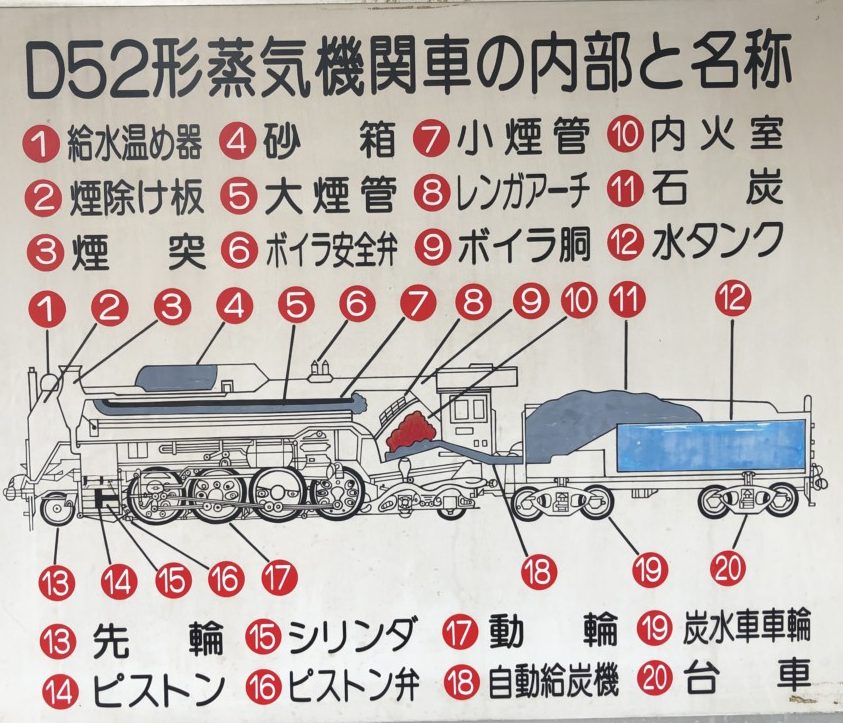
| # | Japanese | Romanization | Translation |
|---|---|---|---|
| 1 | 給水温め器 | kyuusuiatatameki | water heater |
| 2 | 煙除け板 | kemurikeita | smoke shield |
| 3 | 煙突 | entotsu | chimney |
| 4 | 砂箱 | sunabako | sand box |
| 5 | 大煙管 | daikiseru | large smoke tubes |
| 6 | ボイラ安全弁 | boira anzenben | boiler safety valve |
| 7 | 小煙管 | shoukiseru | small smoke tube |
| 8 | レンガアーチ | renga ahchi | brick arch |
| 9 | ボイラ胴 | boira dou | boiler frame |
| 10 | 内火室 | taihimuro | firebox |
| 11 | 石炭 | sekitan | coal |
| 12 | 水タンク | mizu tanku | water tank |
| 13 | 先輪 | senrin | front drive wheel |
| 14 | ピストン | pisuton | piston |
| 15 | シリンダ | shirinda | cylinders |
| 16 | ピストン弁 | pisutonben | piston valve |
| 17 | 動輪 | dorin | rear drive wheel |
| 18 | 自動給炭機台車 | jidou kyuuzumikidaisha | automatic stoker trolley |
| 19 | 炭水車車輔 | tansui shasahrin | tender car wheels |
| 20 | 台車 | daisha | trolley |
Phew! But wait, there’s more. Here’s the story of this particular D52:
I am a type D52 steam train – the largest and most powerful tender locomotives in Japan. I’m number 70 of my siblings in this class. I worked on the Sanyo Line and Tokaido Line after being brought into the world in April 1945.
After being assigned to the Kozu District in February 1951, I was active on the Gotemba Line, travelling a distance of 862,275km helping all the residents of this mountain area. I was originally intended for freight trains only, but I also helped carry passengers since mountain lines such as the Gotemba line have steep slopes, for which my powerful engine was very useful.
When the Gotemba Line became electrified on August 1, 1968, my busy days came to an end, so with the cooperation of everyone in Yamakita Town and the Japanese National Railways, I was moved to this place as a memorial to those times.
I hope to continue to share memories of those bygone days with you all. In return, I ask all of you, and your children, to take good care of me.
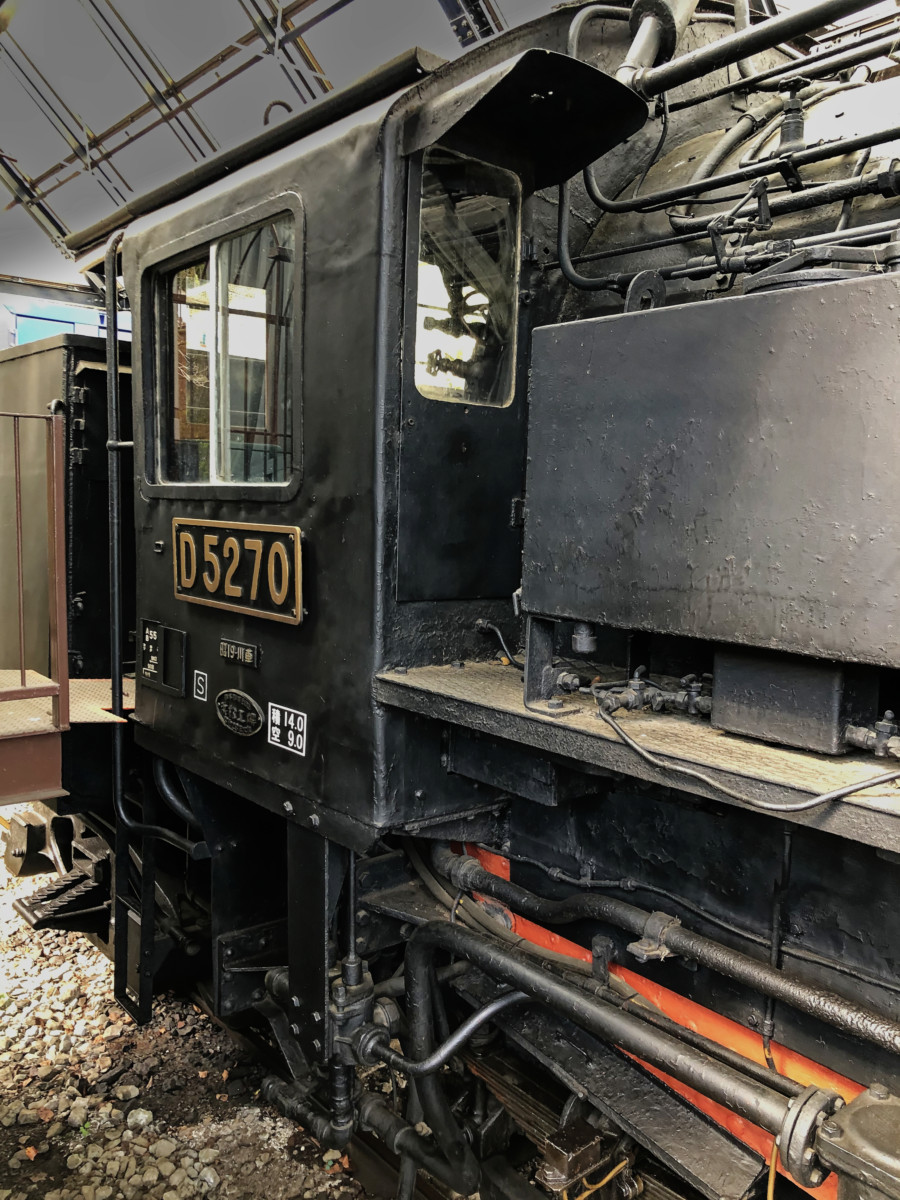


Here are the stats for the train if that’s your scene, taken from the appendix to Steam Locomotives of Japan, Naotaka Hirota: Kodansha International (1972).
TYPE D52 (2-8-2 tender locomotive)
Built by Kisha Seizo Kaisha Ltd., Kawasaki Sharyo Co., Mitsubishi Heavy Industries, Ltd., Hitachi, Ltd. etc.
CYLINDER: 550 x 660mm
BOILER PRESSURE: 16.0kg/cm²
FIRE GRATE AREA: 3.85m²
TOTAL HEATING SURFACE: 244.5m²
– SUPER HEATING SURFACE: 77.4m²
– EVAPORATIVE HEATING SURFACE: 167.1m²
– HEATING SURFACE OF SMOKE TUBES: 147.4m²
– HEATING SURFACE OF FIRE BOX: 17.5m²
– HEATING SURFACE OF ARCH TUBES: 2.2m²
BOILER CAPACITY: 9.5m³
LARGE SMOKE TUBES (diameter x length x number) 140 x 5000 mm x 35
SMALL SMOKE TUBES (diameter x length x number) 57 x 5000 mm x 94
WEIGHT OF ENGINE (in working order) 84.30t
WEIGHT OF ENGINE (empty) 73.75t
ADHESIVE WEIGHT OF ENGINE (in working order) 64.60t
WEIGHT OF TENDER (in working order) 54.10t
WEIGHT OF TENDER (empty) 17.10t
WATER CAPACITY : 25.0m³
FUEL CAPACITY : 12.00t
VALVE GEAR : Walschaert’s
INTRODUCED : 1944
You can visit D52-70 here.
 CityHillsAndSea
Leave a comment