RotW is my Railways of the Warrior project. Visiting all the Japanese train stations with Fuji in the name & the 12 castles with the original keep still standing wasn’t enough to satisfy my love of lists, so now I’m working through all the stations with Musashi in their name.
Click this link for more info.
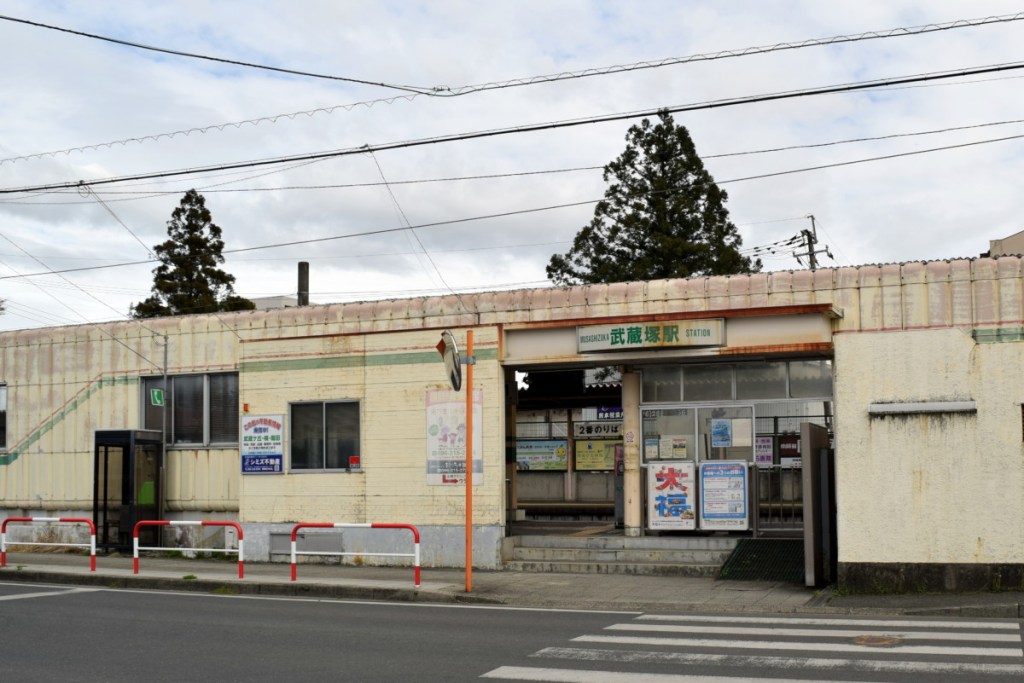
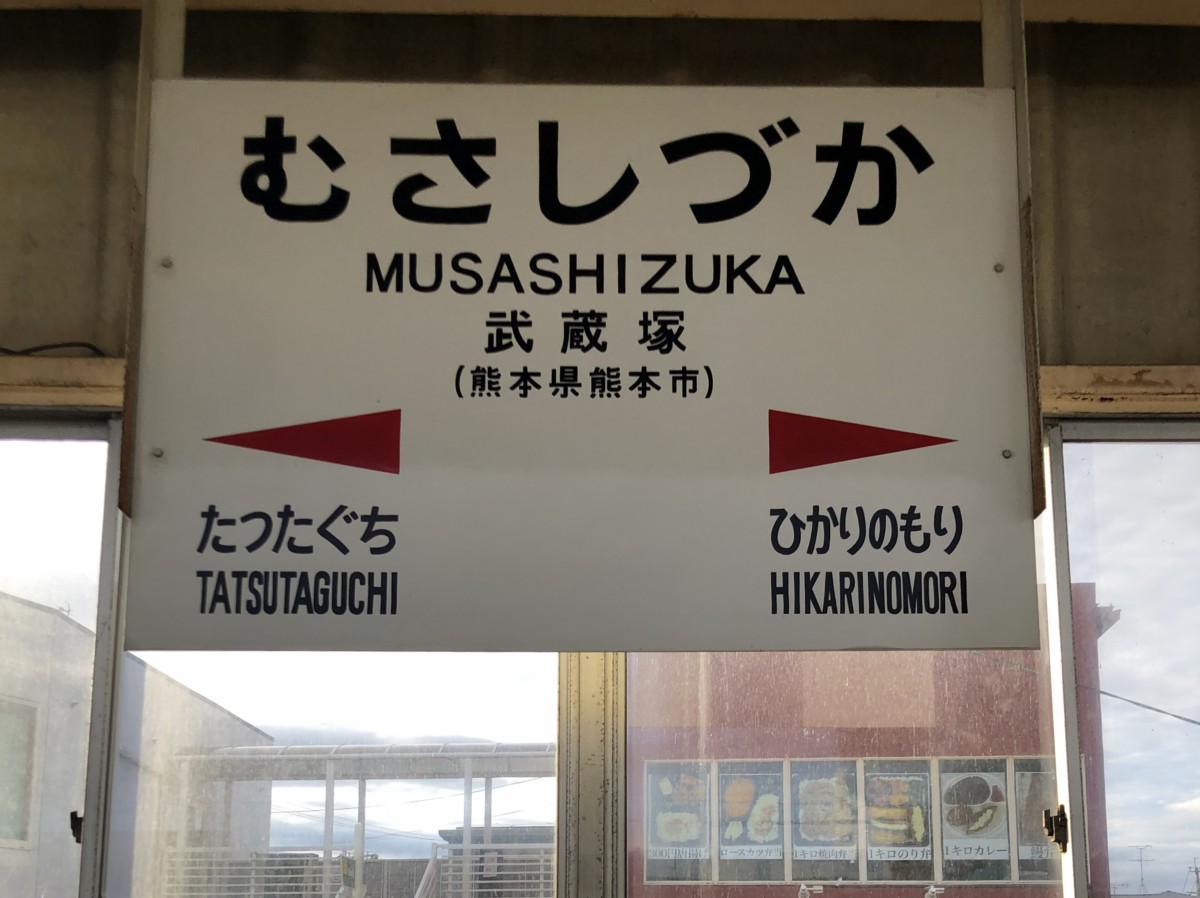
Name in kanji : 武蔵塚
Kanji meaning: Musashi’s Tomb
Station opened : 1st October, 1981
Trainlines: Hohi Main Line
# Passengers daily : 2100
Distance from CityHillsAndSea HQ: 1149km
Located in: Kumamoto, Kyushu
Things to Do
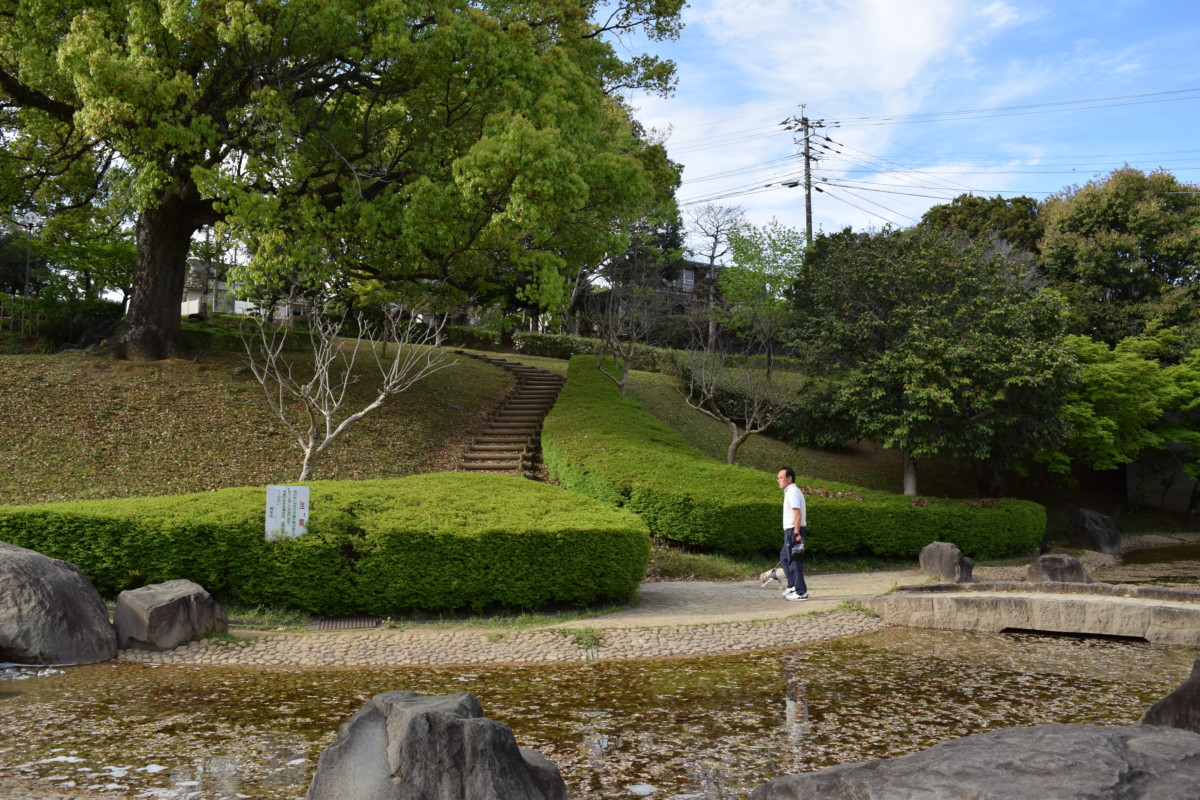
Very little. Would you be surprised if I said there was a park?
Seriously though, you’re probably going to want to head up to Kumamoto city centre if you’re all the way down in Kyushu visiting this station, so check out the castle there. There’s a great view from the top floor of the city hall opposite that’s worth the price of admission. (SPOILER: it’s free)
You should try some basashi too; unless you’re vegetarian, vegan or just plain ethically against the devouring of our equine chums.
All About Musashizuka Station
All joking aside, the park is the reason I came all this way.
Today’s Musashi is the final stop. Number 30.
Perhaps you remember way back at the very start of this particular list when I explained that most of the stations were named for the ancient province of Musashi. You may also be sharp enough to recall that I also said two of the stations were named for the legendary warrior, Miyamoto Musashi.
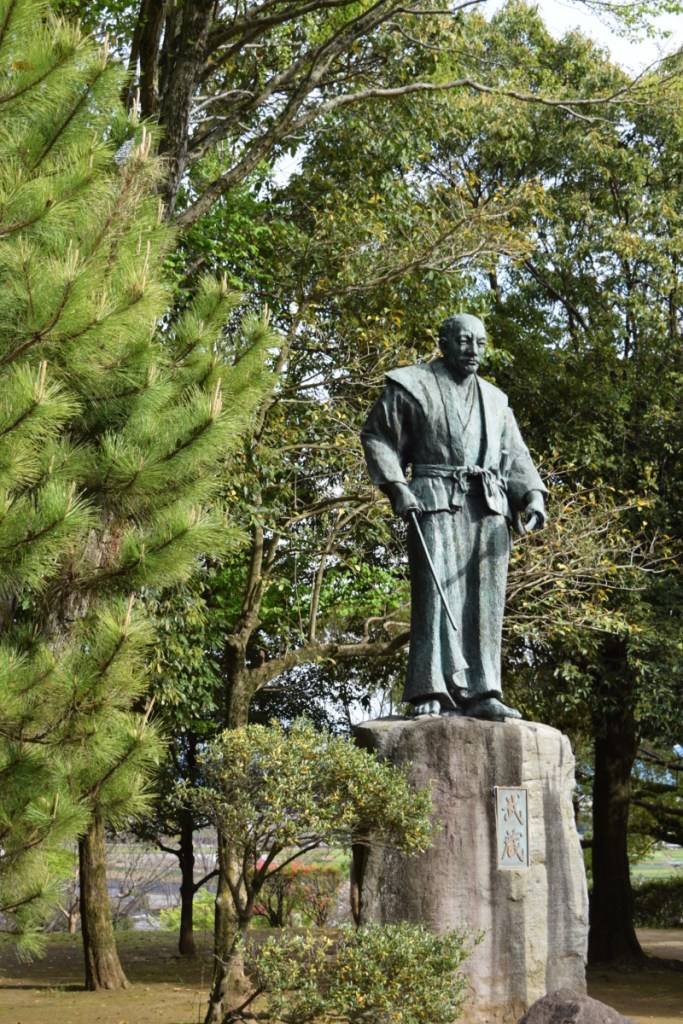
The first on the list I visited is supposedly his birthplace, something that is fairly deducible from its name – Miyamoto Musashi Station.
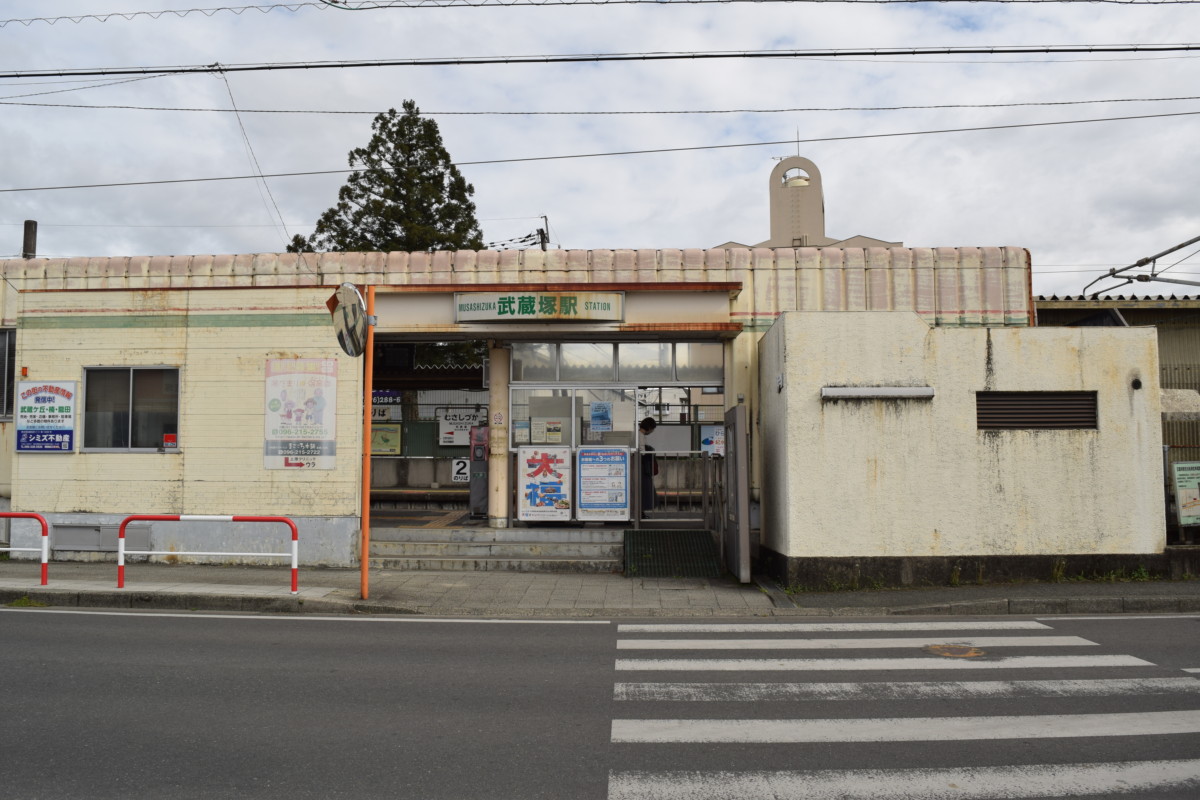
This last one, Musashizuka, also comes with a pretty big clue in its name.
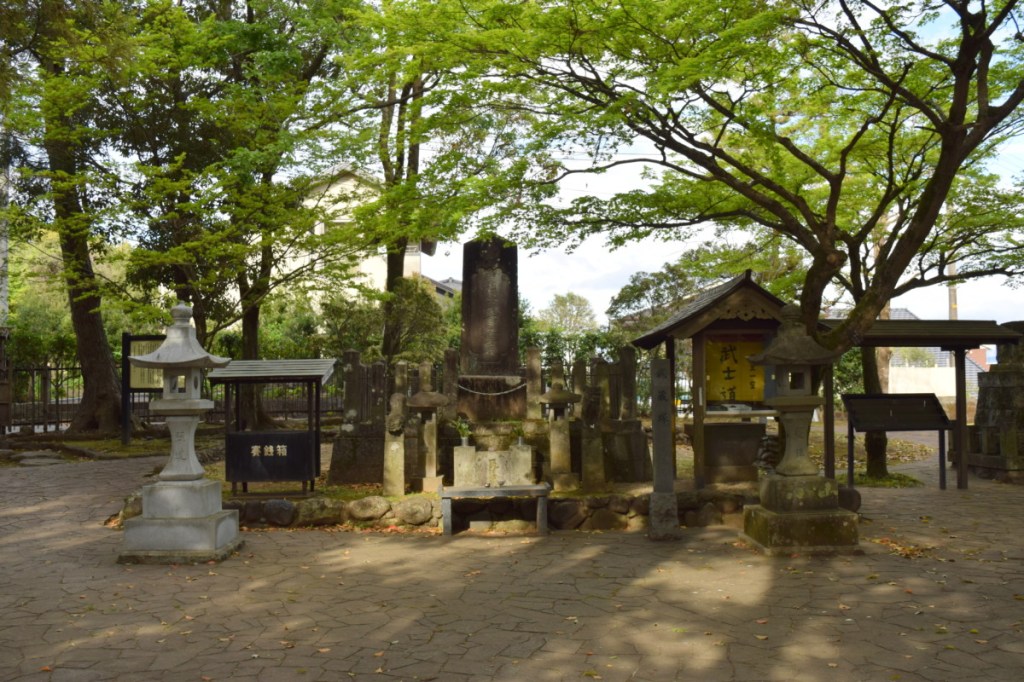
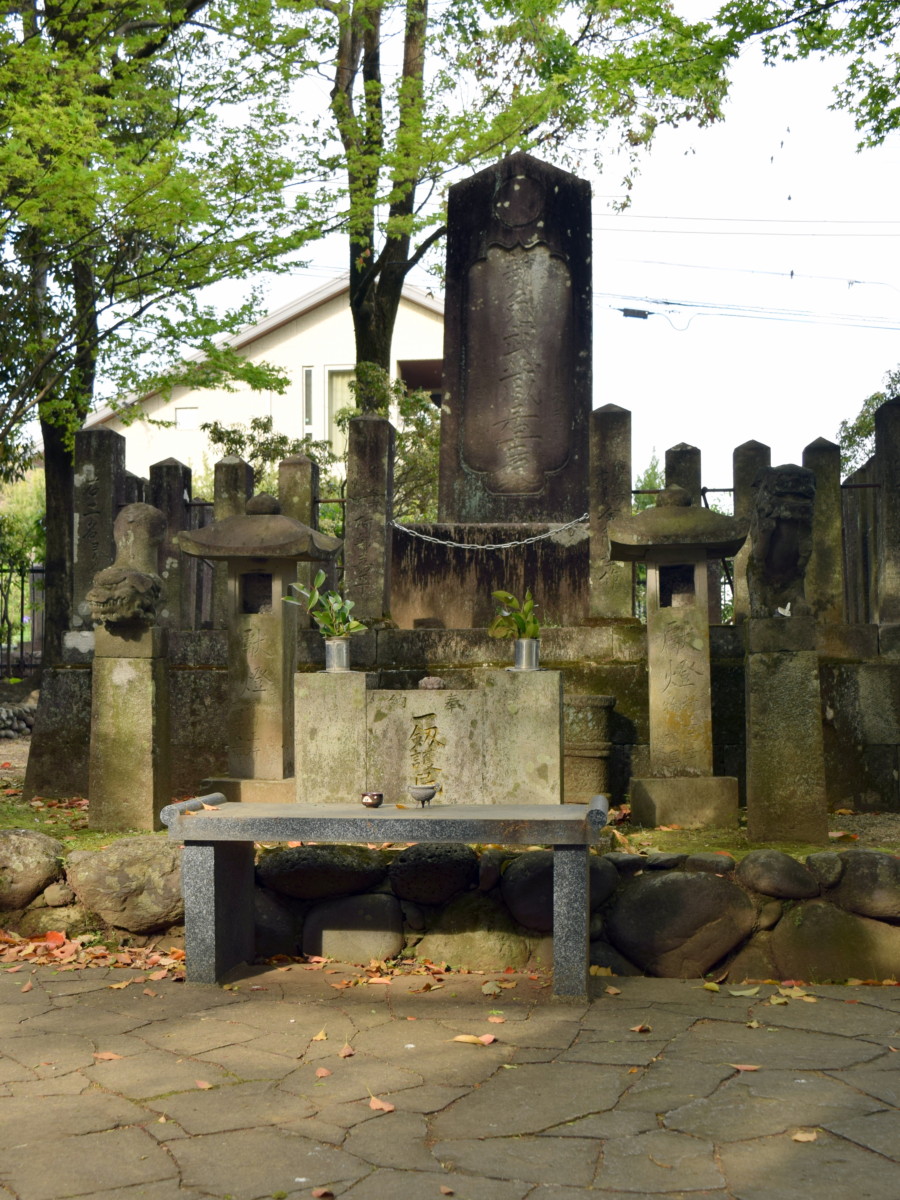
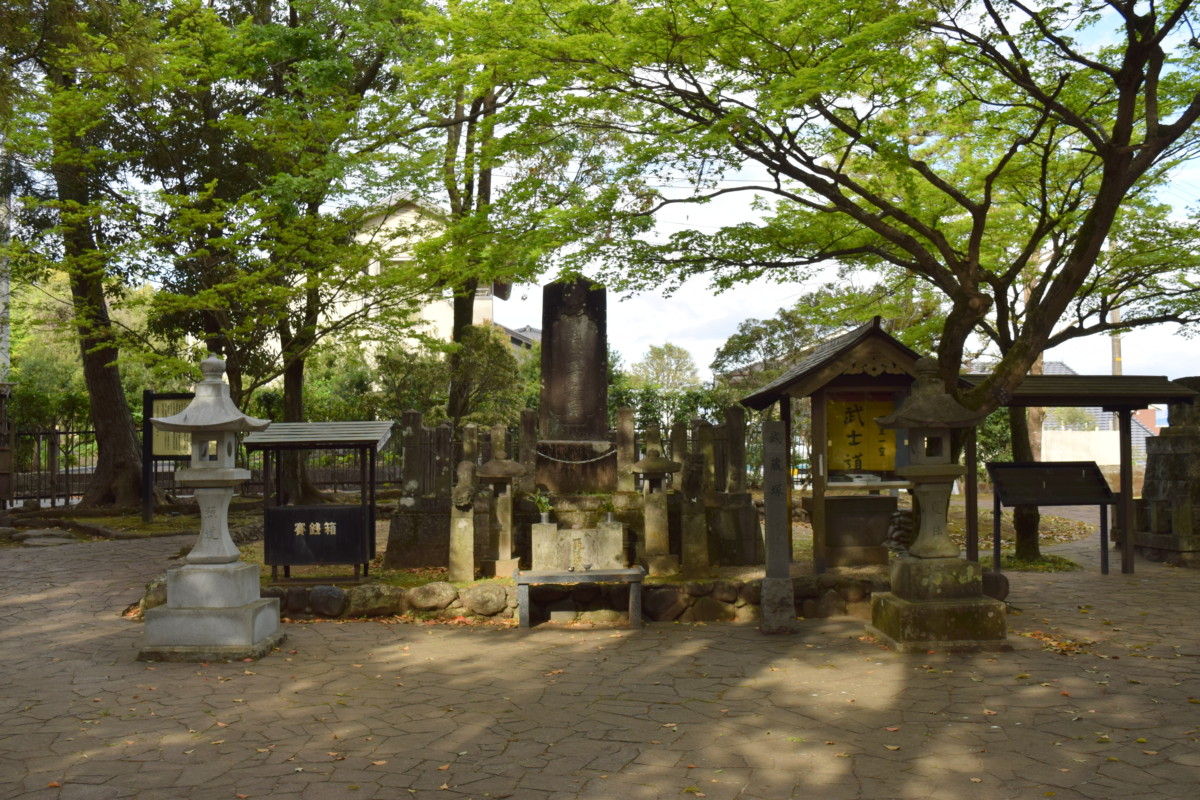
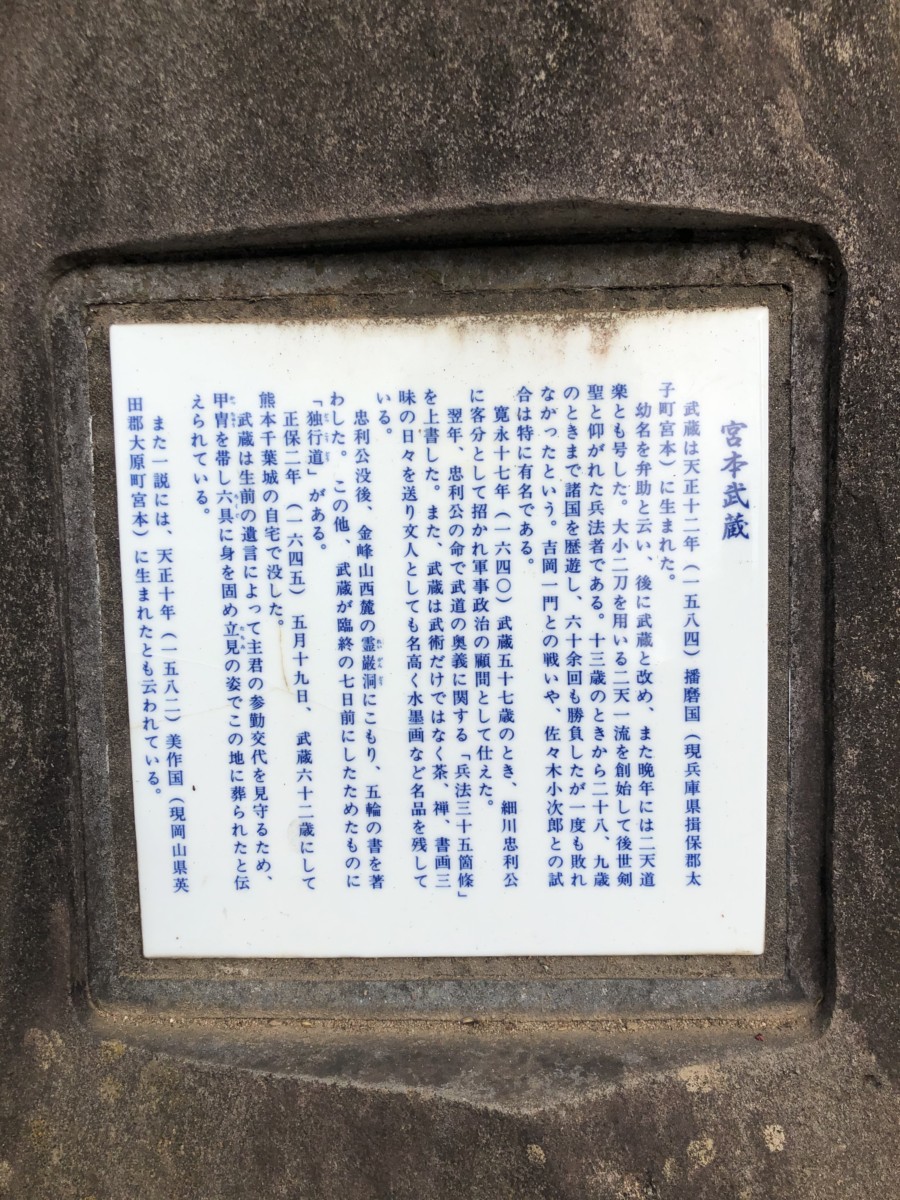
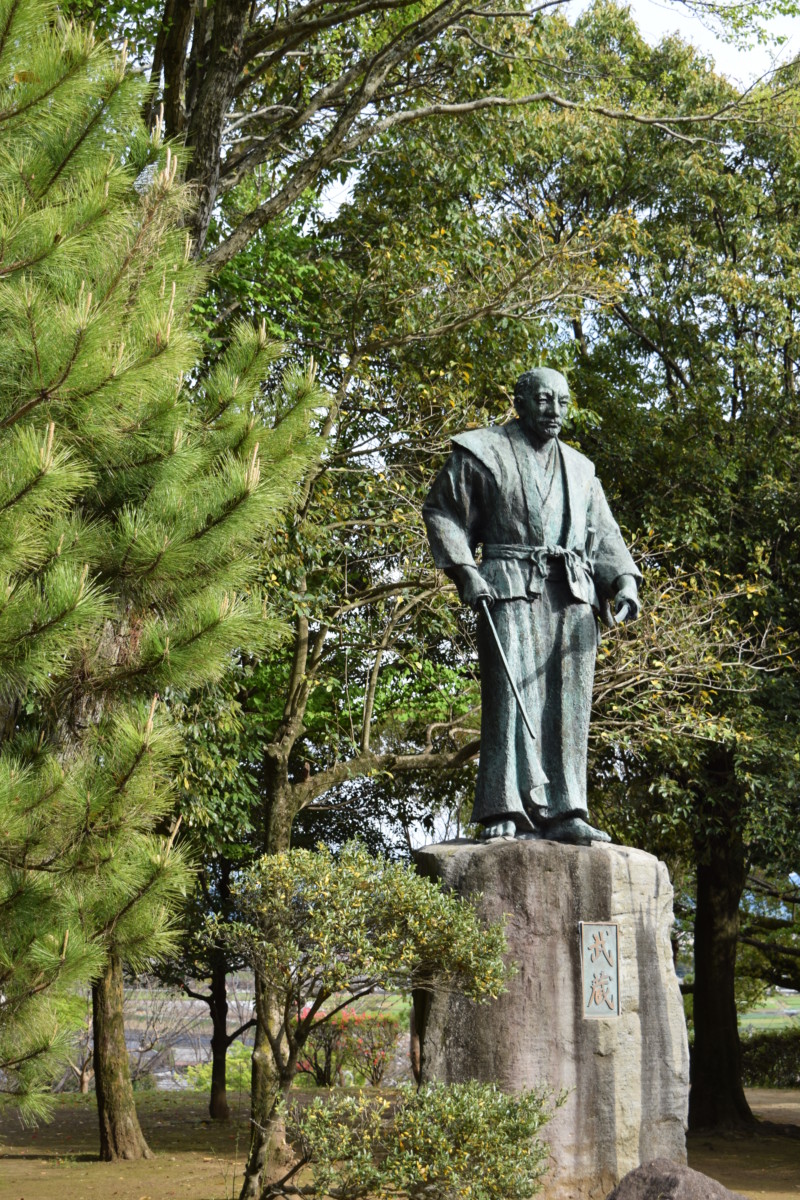
It’s where Miyamoto Musashi is buried.
Obviously, since so much about the man has become intermingled with myth over the years, this happens to be just one of the FIVE places where he’s spending eternity. It is, however, the only one with a station named Musashi’s Tomb; it is also the only one where he was – apparently – buried in full armour, so it’ll suit me rightly.
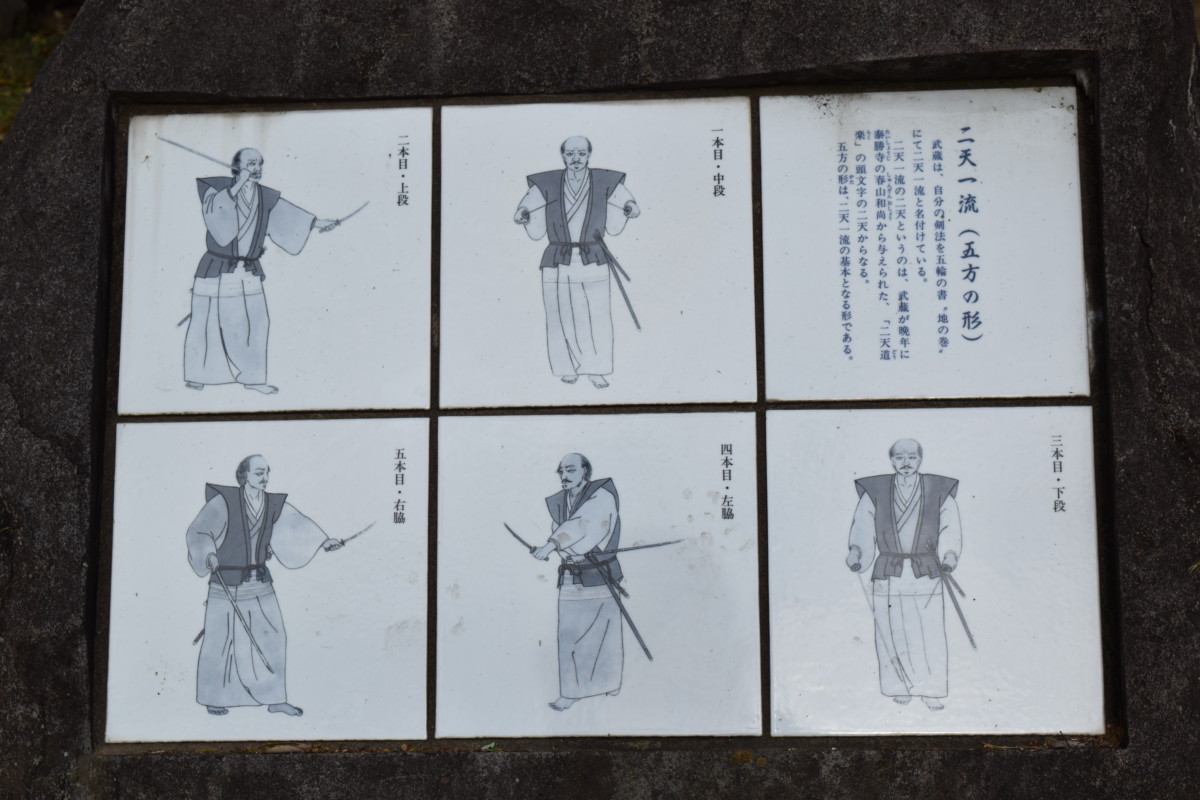
Musashi was invited to Kyushu by Hosokawa Tadatoshi, the daimyo of the Kumamoto area, in 1640. He made his way down here at the age of about 60, settled in to a pretty comfortable life thanks to the generosity of the Hosokawa clan, then set about writing his philosophical masterpiece, The Book of the Five Rings. This is essentially his guide to being an unstoppable honorable two sword wielding death dealing machine.
Obviously he puts it much more poetically than that.
Most of this was written in a cave, Reigando, to the west of the modern day centre of Kumamoto. Musashi spent a great deal of time in this holy little hollow in the rock, working on his manuscript in the last years of his life before moving on to the next world; leaving his body behind … somewhere.
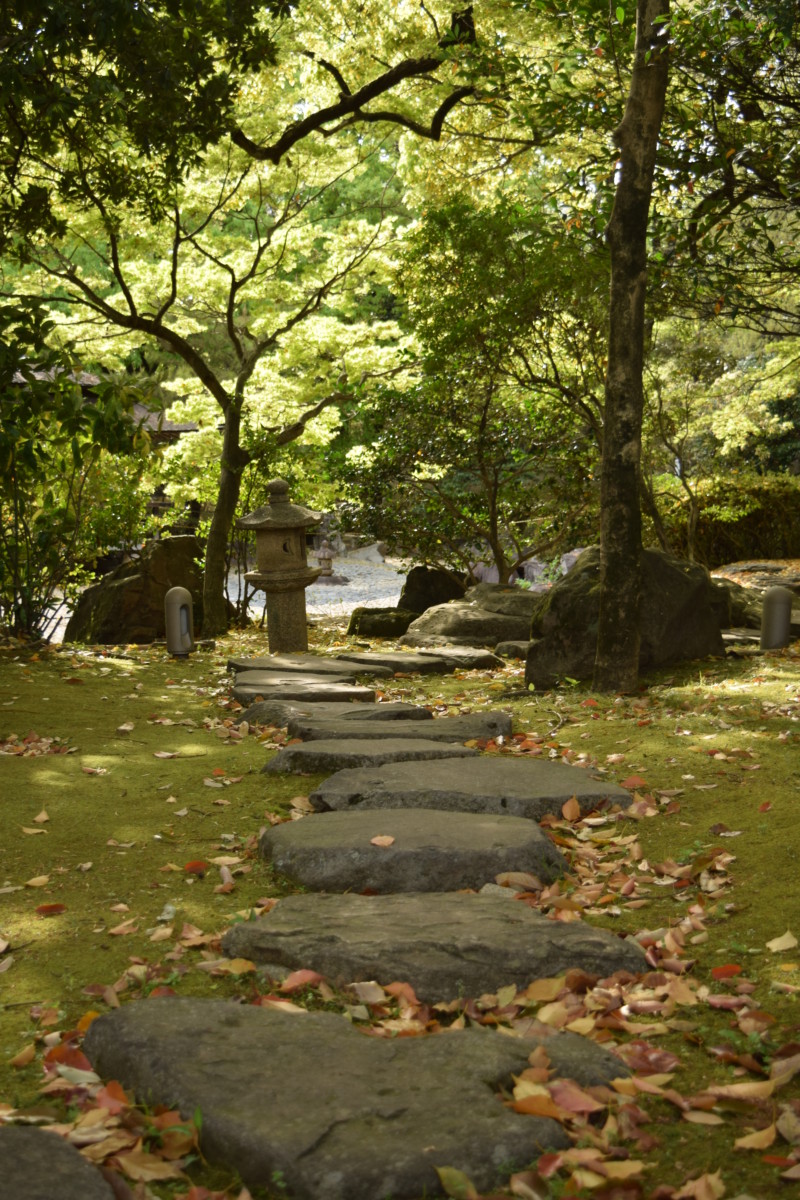
I choose to believe he is interred in Musashizuka, mainly because it’s a wonderfully mellow and understated park; the kind of place that a warrior who’s led a richly colourful life – one perhaps more legend than legit – would deserve as a final point of contact with the physical existence he’s now left behind.
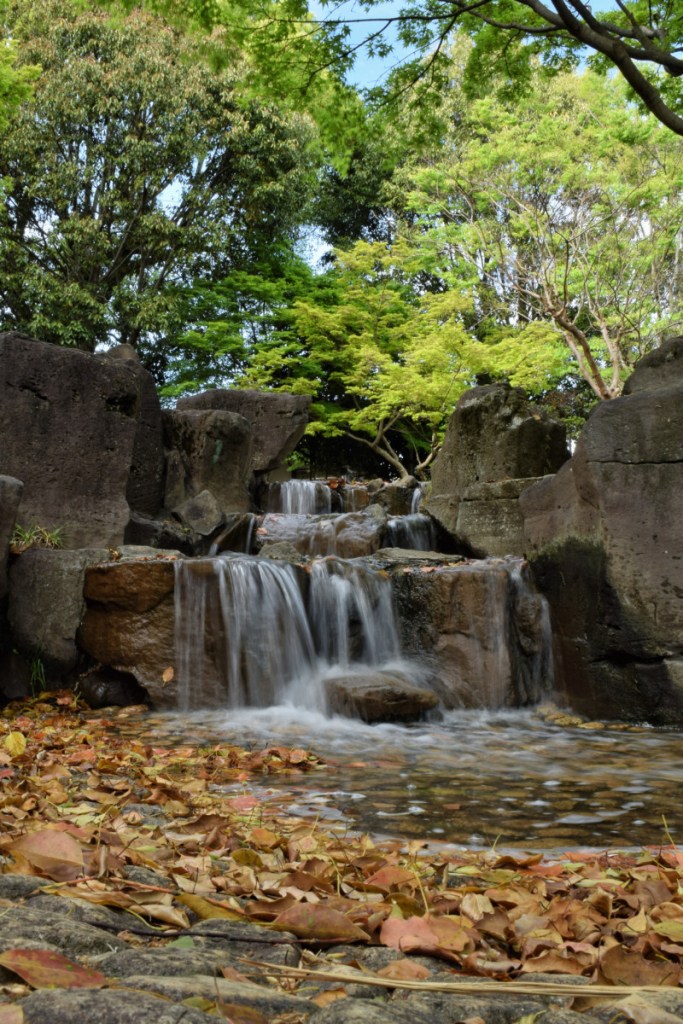
As for me, it felt like the perfect subdued ending to a list of stations that hadn’t been all that dramatic or exciting… but had definitely all been worth visiting.
(Yes, even Musashi-Sunagawa.)
Station Rating
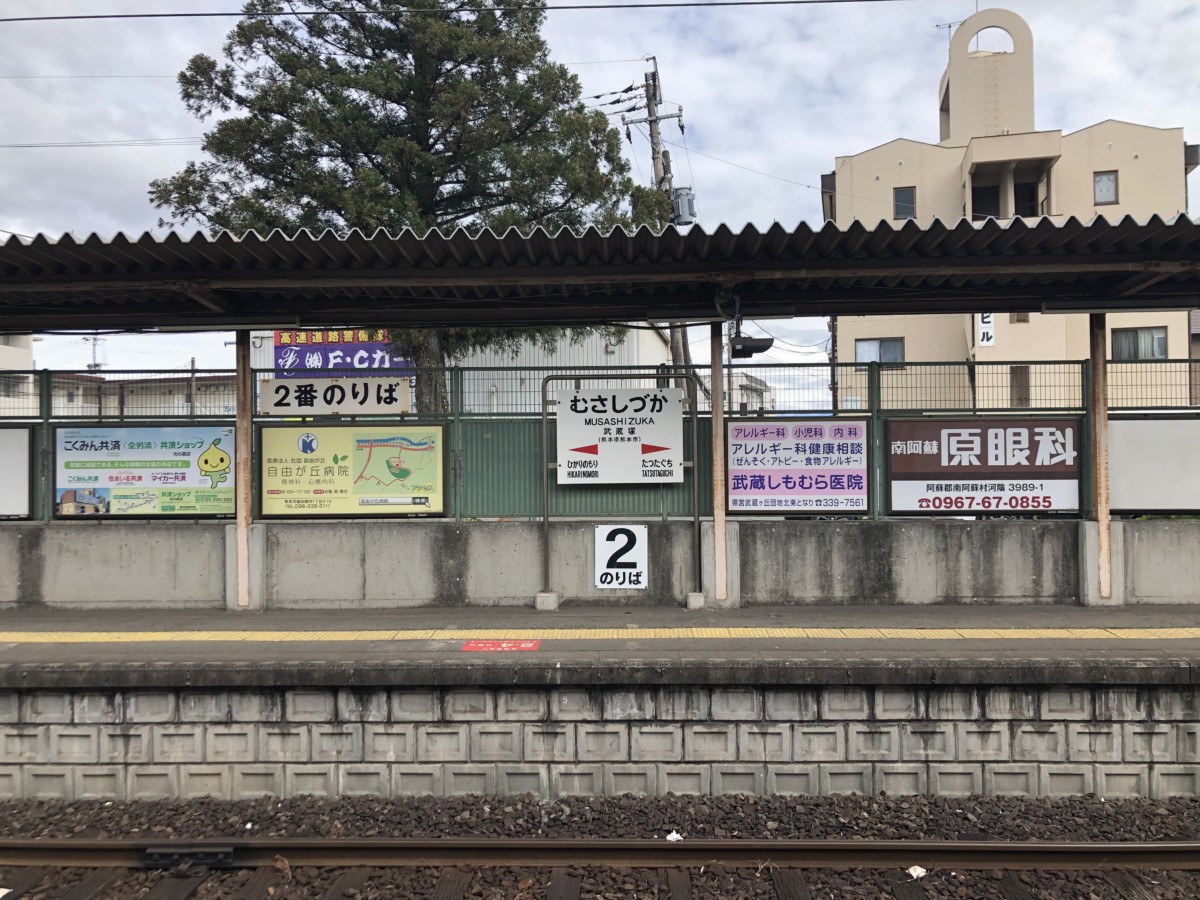
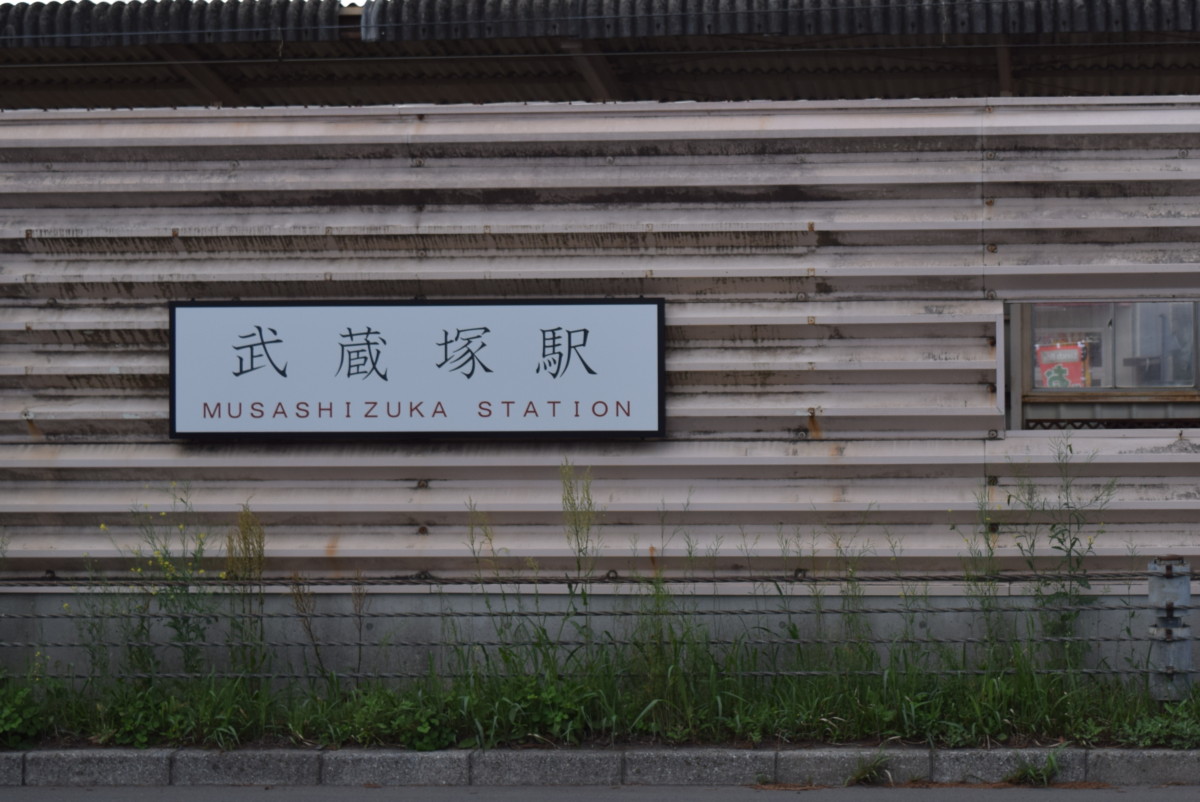
The station itself isn’t particularly special – it has a gloriously eighties’ aesthetic, and nothing nearby save for the park – but the fact that the man himself sleeps out eternity here is good enough for me. The most fitting final destination for this list.
Musashizuka Station Gallery

 CityHillsAndSea
Leave a comment